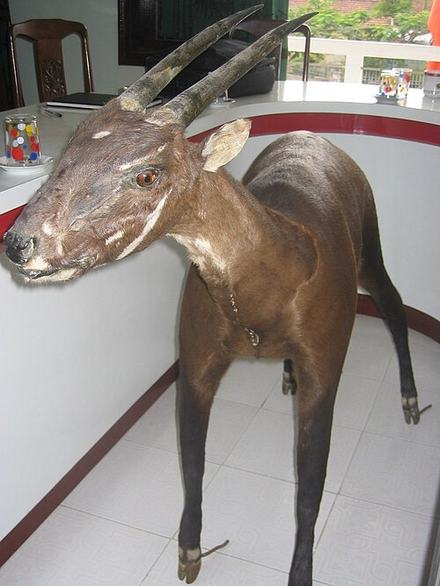
Saola: a discovery beginning with hunters' horns
Researchers began with unfamiliar hunting trophies rather than an encounter with a living animal.
An explanation existsAnnamite Mountains, Vu Quang
Researchers began with unfamiliar hunting trophies rather than an encounter with a living animal.
A photograph attributed to spring 1990 became an emblem of the Belgian wave. In July 2011 its maker told RTL-TVI that he had photographed a suspended polystyrene model.
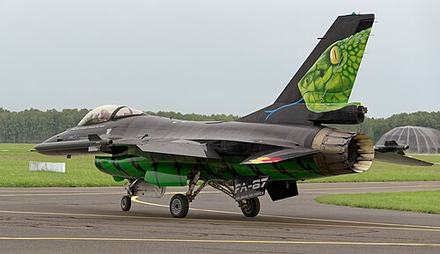
Reports in 1989–1990 prompted an F-16 interception. The military acknowledged a failure to identify the phenomena; radar locks did not establish an extraterrestrial vehicle.
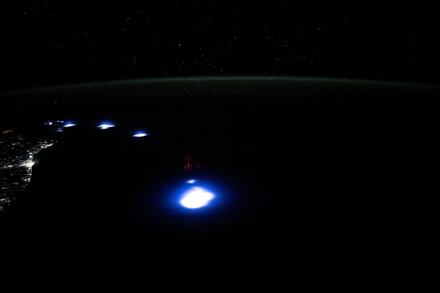
A low-light camera test turned accounts of flashes above thunderstorms into a reproducible field of atmospheric science.
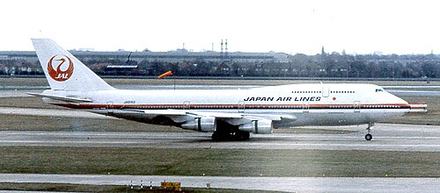
A cargo Boeing crew reported unusual lights. The FAA preserved communications and interviews, attributing an extra ground-radar target to a split return from the aircraft itself.
Sudden deaths of people and animals were investigated through water, gas and terrain measurements.
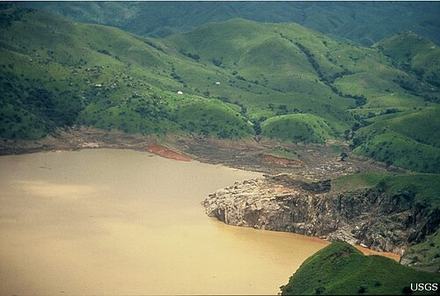
A crater-lake gas release killed 37 people and helped reveal the hazard of carbon dioxide accumulated in deep water.
A winter campaign attempted to turn reports of lights into testable measurements.
A single-witness 1981 account investigated by the gendarmerie, GEPAN and laboratories.
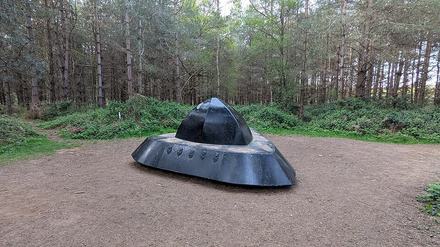
Servicemen reported lights in the forest; surviving records distinguish the early account from later additions.