A camera intended for another task
On the night of 6 July 1989 University of Minnesota researchers were testing a television camera capable of operating in very low light. John Winckler's group was preparing optical equipment for a rocket experiment. Robert Franz pointed the camera toward stars and a distant thunderstorm. The recording unexpectedly preserved a brief flash above the clouds, subsequently recognized as the first video evidence of a sprite. Discovery occurred during an instrument test rather than a dedicated expedition to find an unknown phenomenon.
People had previously described light above storm tops. Extremely brief flashes, distance and intervening cloud made those accounts difficult to check independently. Recording allowed investigators to return to the same event, estimate its duration and compare its position with the storm. That changed the evidence more decisively than another confident eyewitness report.
From luminous patches to a paper
Franz, Robert Nemzek and Winckler published their investigation in Science in 1990. Its title described a large upward electrical discharge above a thunderstorm system, before today's familiar terminology had settled. The original image was crude. Beautiful later color photographs should not be presented as frames from that first night. Observation in 1989 and publication the following summer are separate stages of discovery.
The researchers related the optical signal to the storm's distance and considered electrical connections with the upper atmosphere. A limited recording could not immediately reveal the entire structure or mechanism. It nevertheless supplied a measurable event lasting a small fraction of a second, situated above familiar thunderstorm clouds. Further observations could test whether that arrangement occurred repeatedly.
Confirmation from other viewpoints
Space shuttle video soon supplied an independent perspective. NASA associates verification of these discharges with observations during the 1989 STS-34 flight. Later ground and aircraft campaigns enabled comparisons between events, height estimates and recognition of different transient luminous phenomena. The name sprite became attached to one part of a much broader electrical landscape.
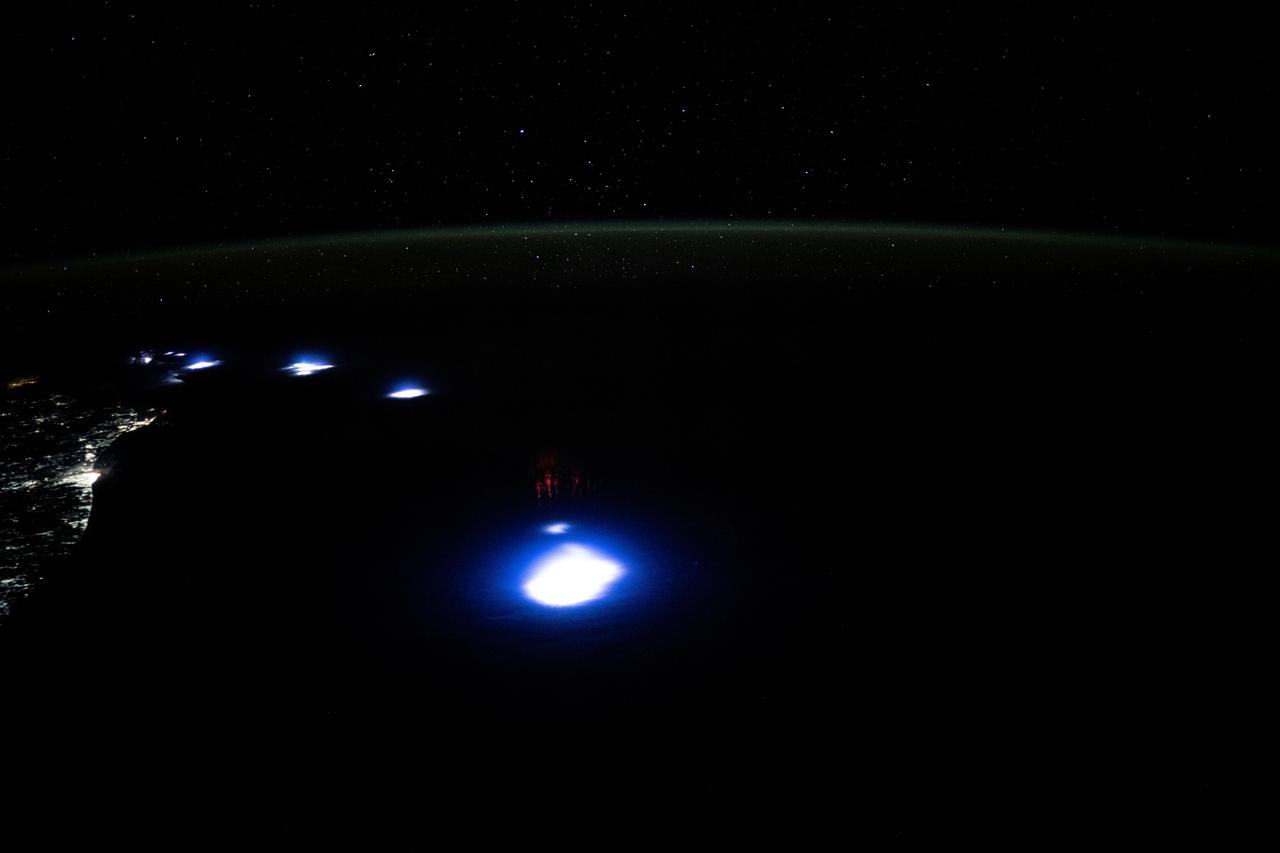
Modern images show red columns, branching structures and faint lower tendrils. Red emission is associated with excited atmospheric nitrogen. Cameras aboard the International Space Station and observers on the ground continue to enlarge the record. NASA's Spritacular project gathers images with information about time and location so that researchers can connect them with particular storms. A spectacular photograph thus becomes evidence that can be compared with other measurements.
Comparison with unconfirmed lights
Puzzling reports became an accepted natural phenomenon through repeated instrumental recording. It does not follow that every unexplained light above a horizon is a sprite: duration, position and a relationship with storm activity still matter. Questions remain about why some lightning discharges produce upper-atmospheric emission and others do not. No precise geographic point is assigned to the first discharge here, since the observing site and the distant storm were not the same location. Preserving that distinction avoids turning a convenient institutional location into a false event coordinate.


