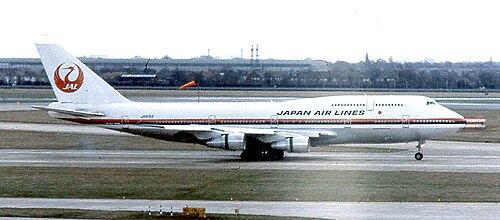
A cargo flight across Alaska
On November 17, 1986 a Japan Air Lines Boeing 747 was carrying cargo from Europe through Iceland and Anchorage toward Japan. Over Alaska Captain Kenju Terauchi reported unusual lights near his aircraft. The route ran from the Canadian border region through Fort Yukon and Fairbanks to Anchorage. Some American records use November 18 in Universal Time. That is a time-zone calendar difference, not a second observation. A map can reasonably mark the flight corridor, but it cannot assign the supposed unknown object one precisely measured position on the ground.
What the crew reported after landing
FAA personnel, including Jim Derry, Ron Mickle and Jack Wright, interviewed the crew that evening. Early notes list yellow, amber and green lights, numerous small light sources and apparent erratic movement. The captain supplied drawings. The record describes the crew as professional and rational and notes ordinary language difficulties during questioning. This is useful evidence about the reporting procedure: the witnesses were taken seriously. A favorable assessment of their condition nevertheless does not establish the distance, dimensions or physical origin of the lights they described. Those require additional evidence beyond credibility judgments.
Radio communications and a turn
During the flight the captain discussed the experience with controllers, and the Boeing made a complete turn near Fairbanks. Communications, route charts and separate interviews with the captain, first officer and flight engineer survive in the released material. Initial notes mention use of the airborne radar and an estimated range of about seven miles. That equipment differs from the ground-based air-traffic-control system. Several kinds of radar report consequently need separate examination. Every reference to a target cannot simply be combined into one continuous, independently verified track of a large unknown craft.
What other observers saw
Controllers considered the possibility of another aircraft because an extra target appeared near JAL. A northbound United Air Lines aircraft was directed to look. Its crew saw the Japanese Boeing but did not report another vehicle beside it. This does not automatically disprove Terauchi's earlier impression: the observers were looking at another time and from another geometry. The negative observation nevertheless belongs in the case. It limits claims that every aircraft involved independently saw a large accompanying object. The official release does not establish such a shared visual identification.
The FAA's explanation
When it released records on March 5, 1987 the FAA said technical specialists had examined the data using identical equipment in Atlantic City. They attributed the extra ground-radar target to imperfect correlation between a primary return from the Boeing and its transponder response, producing an impression of two targets. The agency considered air-traffic-control safety uncompromised. It also explicitly said it had not conducted a comprehensive scientific study of stars, planets or every possible optical explanation for the crew's account. Explaining a radar return therefore should not be enlarged into an official identification of every reported visual light.
Comparing the sources
The FAA inventory lists audio, interviews, drawings, communications and regenerated radar images. The releases themselves distinguish early interview notes from the subsequent technical conclusion. A substantial archive provides a strong basis for investigating how a report developed, but it does not make every supposition inside it a verified fact. The split-return explanation addresses a particular portion of the ground-radar evidence. The visual-light account retains a separate uncertainty. The defensible outcome is limited: a real crew made a real report, the FAA investigated its safety implications, and the instrument documentation did not establish a giant extraterrestrial vehicle.


