An evening near Eupen
On November 29, 1989 gendarmes and residents in eastern Belgium began reporting unusual lights. Descriptions included a large dark shape with bright lamps, often arranged as a triangle. Reports subsequently arrived from other parts of the country. The civilian organization SOBEPS collected testimony, visited witnesses and tried to compare routes. For the observers these were particular evenings, roads and viewing directions. Later retellings compressed many episodes into the single image of a Belgian triangle, although a shared label does not establish a shared cause.
The interception night
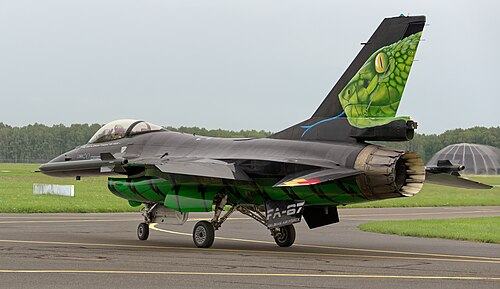
The best known military episode occurred on March 30–31, 1990. Two F-16s were dispatched after ground reports and radar activity. The published account of Wilfried de Brouwer's statement describes repeated interception attempts and brief locks by airborne radar. The pilots did not obtain visual confirmation of a target. This matters because a radar contact, a light seen from the ground and a supposed solid structure cannot automatically be treated as one object. Their times, directions and distances first have to be demonstrably consistent.
What the military acknowledged
The military account ends without identifying the nature or origin of the phenomena. Britain's National Archives later highlighted Belgian material preserved within released British files, including an Air Force statement and de Brouwer's account. The archival guide supports the existence of those records and radar locks. It does not turn an unidentified return into an aircraft with independently measured impossible performance. Sudden changes in displayed values require particular care: a short, unstable sequence need not represent continuous movement by one physical target.
Different kinds of testimony
SOBEPS received police observations, civilian recollections and reports with varying levels of detail. Franck Boitte's later review, hosted by COBEPS, distinguishes notifications, witnesses and investigated cases. Its catalog rules could create separate entries when observations were divided by time or distance. A count of entries therefore should not be presented as a count of independent vehicles. A gendarme's training helps establish the circumstances of an account but supplies no missing instrumental range. An impression of enormous size likewise depends on an unknown distance to the lights.
A photograph that came later
The celebrated Petit-Rechain photograph belongs to a separate episode in spring 1990. In 2011 its maker told Belgian television that he had photographed a model. Caelestia traces how the image acquired its reputation as visual confirmation of the entire wave. The admission undermines that photograph as evidence of an aircraft. It does not retrospectively explain every November account or establish that every observer was dishonest. A photograph, a police statement and a radar record each require their own chain of provenance and independent assessment.
Comparing the records
The military transcription describes interception operations, the archival guide confirms a documentary trail, and the civilian catalog demonstrates how heterogeneous the reports were. They agree that unusual observations produced a real official response. They do not provide one continuous record linking every triangle, light and radar lock. Historical uncertainty consequently survives at the level of particular unidentified episodes. An extraterrestrial interpretation would require additional positive evidence of origin. An inability to supply a final identification cannot perform that evidential work by itself, however dramatic the original response appeared.


