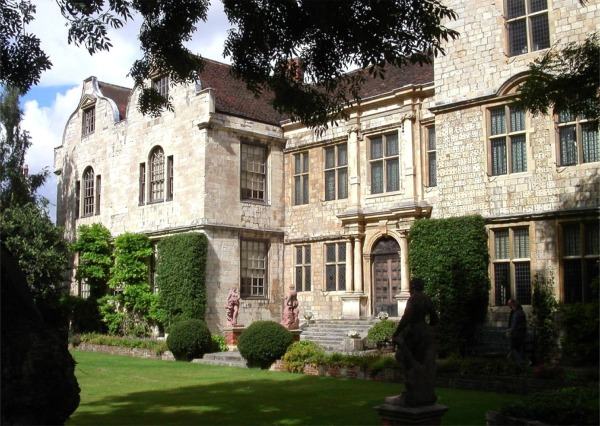
A trumpet beyond the wall
In February 1953 the young apprentice Harry Martindale was working in the cellar of Treasurer’s House near York Minster. According to his later recollection, installing a heating system required an opening through the vaulted brick ceiling. He heard a trumpet and initially assumed that somebody had a radio playing. The sound repeated, grew closer and seemed to come from the other side of a wall. A soldier’s helmet then appeared through the solid masonry. This begins the encounter that the National Trust identifies as the property’s best-known ghost story.
A column below the floor
Martindale said that a mounted soldier followed the first figure, with further soldiers marching two abreast behind him. The National Trust version gives approximately twenty men. They crossed the cellar and disappeared into the opposite wall. Their peculiar height was particularly memorable: only their bodies above the knees were visible, as if they walked on a surface below the existing floor. Green tunics, shabby clothing and equipment unlike familiar popular images also entered the account. Those features later attracted supporters because the witness appeared to describe an unfamiliar past with surprising precision.
A recollection spoken years afterwards
Psi Encyclopedia publishes an extended interview recorded by Melvyn Willin in the same cellar around 1976. Martindale discusses his fright, the position of the figures and the response of people at the house. It is valuable evidence for his own account, but decades separate the alleged event from the recording. His explanation for keeping quiet concerned his reputation and subsequent career as a police officer. That explanation helps interpret the storyteller’s conduct, without supplying a document made on the day of the sighting. An audio recording establishes that the account was given; it does not itself establish soldiers passing through masonry.
Archaeology beneath the story
The National Trust connects renewed interest in the report with excavations of Roman York and the discovery of the headquarters building, the principia, in 1969. A Roman fortress called Eboracum genuinely occupied this historic centre, and a major Roman road crossed the area beneath the house. In popular retelling this provides a striking resolution: the soldiers were marching at an ancient ground level. Nevertheless, floor levels and a Roman road are archaeological questions in their own right. They do not record a moving column in 1953. Disagreement about the men’s ages and appearance also generated different interpretations, including legionaries, late defenders and forces assembled from different units.
Comparing the testimony
The National Trust additionally mentions a guest of former owner Frank Green and a warden who allegedly encountered Romans. These are published as part of the property’s accumulated local narratives, rather than simultaneous records of one event. The house’s history separately explains Green’s alterations and furnishing before its transfer to the Trust. Comparing the sources leaves the building, Roman city and later interview securely established. The figures’ appearance, number and route remain features of Martindale’s recollection rather than an independently reconstructed military procession.


