A request from the ground
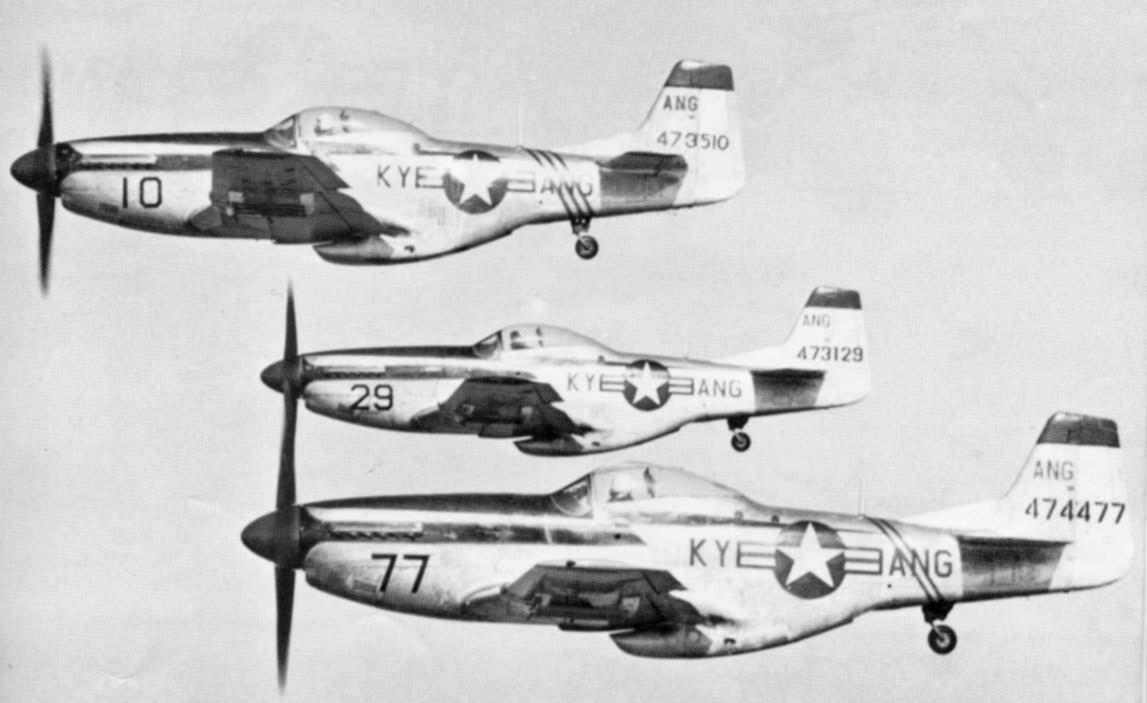
On January 7, 1948 Godman Field in Kentucky received reports of an unusual object. Personnel in the control tower and officers who joined them subsequently watched something themselves. Former Blue Book chief Edward Ruppelt describes binocular observations but no agreed shape: accounts included a rounded object, a parachute and a cone. When a formation of National Guard fighters passed nearby, Captain Thomas Mantell was asked to approach and identify what the men on the ground could not recognize. A routine identification request became a fatal flight.
Climbing after the target
One aircraft continued home because of limited fuel; Mantell and two companions started climbing. In Ruppelt's reconstructed sequence, Mantell reported something ahead and above and kept ascending. The famous description of an enormous metallic object was remembered inconsistently. Ruppelt emphasized that the tower witnesses could not agree about those words and that no recording of the exchanges existed. The announcement that he intended to reach twenty thousand feet was more consistently recalled. A dramatic quotation therefore cannot carry the evidential weight of an authenticated audio record.
The final flight
The accompanying pilots stopped climbing because they lacked oxygen and repeatedly failed to contact their leader. One later refueled, obtained oxygen and returned to search, without identifying a target. Mantell crashed. Kentucky's National Guard history records him as the unit's first flight casualty. Ruppelt later obtained the accident report and summarized its conclusion: oxygen deprivation caused unconsciousness, followed by a high-speed dive and structural failure. He explicitly rejected circulating tales of a perforated body, radioactive wreckage or extraordinary destruction. These claims should not become additional facts through repetition.
From Venus to a balloon
The initial public explanation identified Venus. Revisiting the case, Ruppelt discussed the planet with astronomer J. Allen Hynek. Its direction was roughly compatible, but daylight visibility, haze and reports of a visible shape made the identification difficult. Separate evening observations of Venus also could not simply be assigned to the afternoon pursuit. Ruppelt reconsidered telescopic observations of a balloon elsewhere and the then-secret Skyhook program. A very large high-altitude balloon was unfamiliar enough to look extraordinary to pilots who had never encountered one.
The missing connection
Historical winds allowed Ruppelt to outline a balloon route from southwestern Ohio through areas of successive reports and then southward. This could account for prolonged visibility and apparent hovering more naturally than a rapidly maneuvering craft. Nevertheless he stated an important limitation: he could not locate the launch record establishing that a balloon actually departed on January 7. Program participants remembered operations in the region but would not confirm that particular flight. A plausible reconstruction is consequently different from a recovered tracking log for the specific target.
Comparing the sources
The military history establishes the pilot and the genuine fatal accident. Ruppelt's account documents changing explanations and the gaps in the material available to him. His involvement makes the retrospective valuable, although it cannot restore a missing radio recording. Later commemoration of Mantell's service likewise does not identify the target. Together the records support an aviation explanation for the death and a substantial balloon hypothesis. They provide no independent evidence that an unknown machine attacked the fighter. Confidence in the crash history is greater than confidence in the precise identification of what Mantell pursued.


