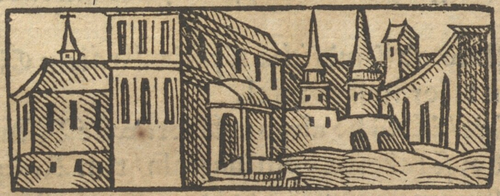
A woman without a name
Under the year 1344, Neplach’s chronicle opens this account with remarkable economy: a certain woman dies and is buried in Lewin. It gives no personal name, age or family history. After burial she allegedly rises, pursues people and causes deaths. The danger does not grow from a long biography of earlier wrongdoing, but from a breach of the expected order: the dead should remain in the grave, yet she continues acting among her neighbours. This lack of biography helps reveal how much later writers added to the short episode. Those additions cannot all be read back into the medieval entry.
Blood and a burial cloth
The body is pierced, but this attempt to prevent further attacks proves insufficient. Neplach describes blood flowing as from a living animal and a burial cloth supposedly swallowed in considerable quantity. When extracted, the cloth is bloody. The scene presents a reading of the corpse: people seek confirmation in the remains for events said to occur outside the grave at night. It does not preserve a systematic modern examination. Burial conditions, the interval before removal, inspection methods and the participants’ original words are unknown. A disturbing detail survives as chronicle text rather than as a specimen available for renewed investigation.
Wood that refuses to burn
The next obstacle concerns the destruction itself. Prepared wood cannot be ignited in the ordinary way. The account introduces advice from elderly women to use material from the church roof; the Latin term and translations of this detail require caution. It should not silently become a precisely identified object. Within the narrative the advice works, the remains burn and the harm ends. There are two refusals of ordinary control: the body resists the stake, then fire resists the people. Special knowledge is required to bring the communal action to completion.
How a potter’s wife appeared
Researcher Niels Petersen compares this concise text with a later line associated with Czech chronicler Hajek. In a Dudley Wright version he quotes, the woman has become a potter’s wife suspected of witchcraft. She is buried outside consecrated ground, takes the forms of unclean animals and carries the stake as a weapon after being pierced. The year moves to 1345. These motifs produce a fuller and morally more explicit narrative while increasing its distance from Neplach’s sparse notice. The dates belong to different textual versions; greater detail alone supplies no reason to prefer the later one.
Comparison and uncertain geography
Maly and Enenklova’s modern academic study mentions the incident under 1344 beside the Blov shepherd. Petersen separately notes disagreement over Lewin’s identification, with different settlements proposed in the literature. No confident map point is therefore assigned, and the geographic uncertainty is made explicit. The chronicle securely establishes a medieval narrative about a harmful dead woman. Later additions show the image developing. Neither their vividness nor repeated descriptions of successful burning demonstrate that a woman physically emerged from her grave. Keeping the earliest entry and the expanded version apart preserves the most interesting evidence: the story’s transformation over time.


