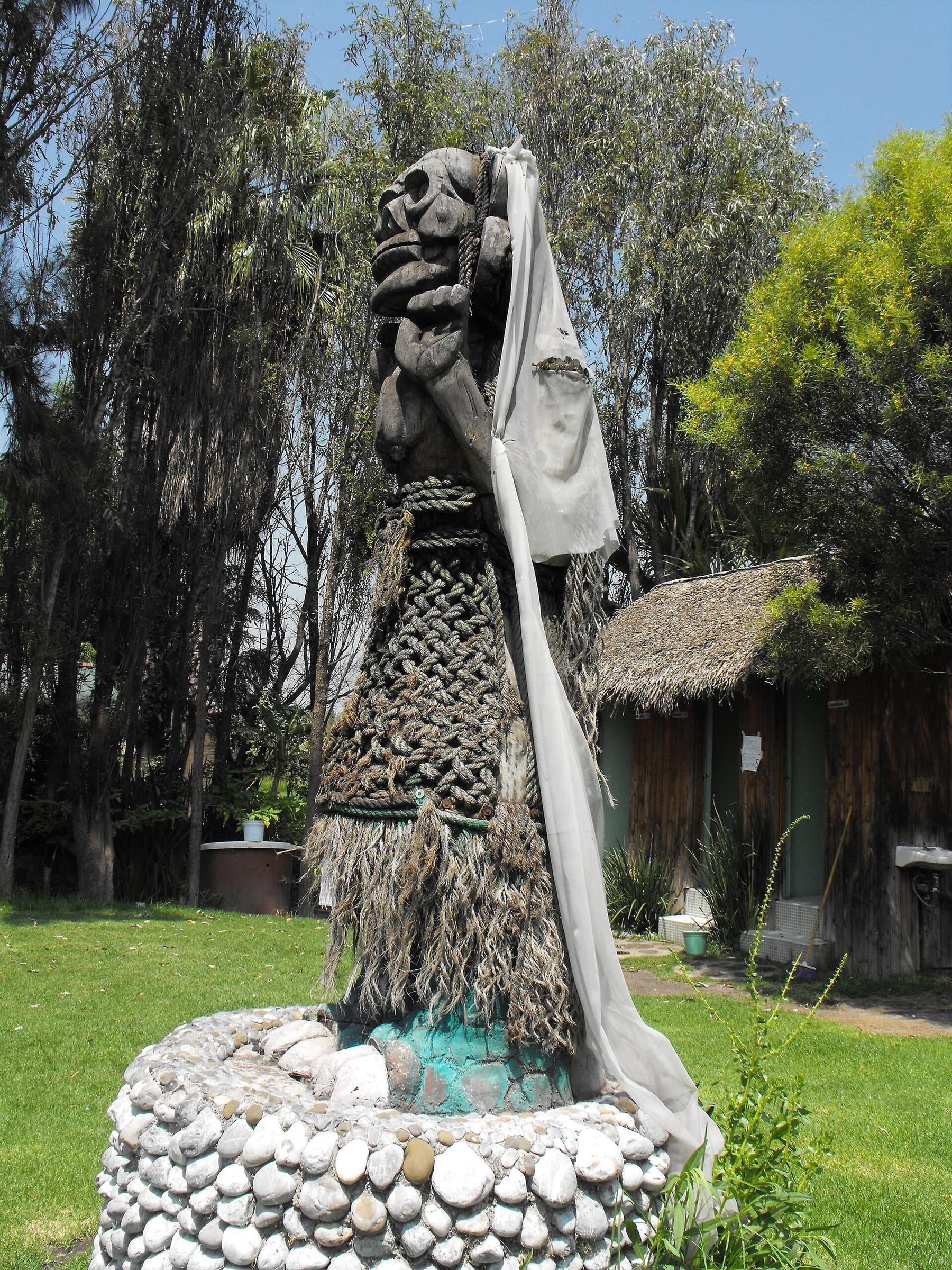
The weeping comes first
La Llorona often enters a narrative as a sound. A woman cries beside water at night, and only afterwards does a solitary figure emerge. A river, drainage ditch or road may provide the setting; white clothing and a call for children make the encounter recognisable without being compulsory in every version. The Library of Congress stresses this diversity. One account explains who walks at night, another supplies a dead woman’s entire life story, while a third is simply a brief encounter. Combining these forms can create a misleading impression of one ancient biography. Oral tradition does not require that uniformity.
A mother responsible for her loss
In a familiar group of plots a woman destroys her children in water after the breakdown of a relationship. Remorse follows, and the search continues after death. Some narrators call her Maria, others supply another name or none at all. The movement towards water, an irreversible act and a return to the place of loss carry the story. Motives nevertheless vary: jealousy, social inequality and an abandoned family enter different combinations. Treating the whole complex as a documented crime committed by one particular historical woman would mistake an assembled narrative for a judicial case.
Mexico City and Gilberto Cano
Thomas Janvier’s record leads in another direction. The notes to his book of Mexico City legends identify a conversation with Gilberto Cano, a local amateur antiquarian. This strand emphasises a nocturnal appearance and an urban itinerary. Transmission matters here: the source tells us who supplied the story to the author, without turning that person into an eyewitness to every episode. Bridges and streets give the apparition a recognisable stage. A reader can imagine an empty road interrupted by crying while retaining the distinction between the location inside a legend and an established event site.
Stories behind closed doors
Folklorist Bess Lomax Hawes studied La Llorona narratives among girls in a California juvenile institution. Her paper, available through the Library of Congress archive, shows maternal imagery, children, danger and separation operating in a specific social environment. This differs markedly from a visitor’s walk through old Mexico City. The character becomes part of conversations among people whose own freedom is restricted. It would be premature to regard every version as the same lesson about obedience: a crying woman may generate fear, sympathy or disagreement over responsibility.
A hundred and twenty versions
Fernando Horcasitas and Douglas Butter compared 120 variants. Their historical-geographical method sought a recurrent framework and excluded rare names and settings from its reconstruction. For this account, the discarded details remain significant because they reveal local storytelling at work. The researchers were reconstructing a narrative, rather than demonstrating a dead woman’s return. Hawes’s archive, the collected variants and Janvier’s book document different links in a tradition. They neither securely identify one historical prototype nor make similar motifs independent confirmations of a ghost. The record consequently follows several connected stories rather than assigning an invented origin date or a single point on the map.


