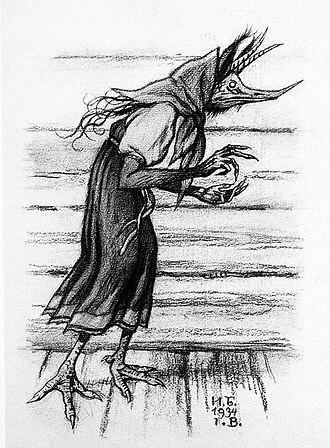
Someone uses the abandoned spinning wheel
In Sergei Maksimov’s chapter the kikimora emerges from a dark part of the house after the household has gone to bed. Her territory is intimate and domestic: the stove, the space beneath the floor, the bench and the shelf holding a spinning wheel. In a northern account he preserves, a woman wearing a sarafan and loose hair first surveys the sleepers and then begins working with their equipment. The spindle can be heard and the flax moves, but this labour promises no useful cloth. For spinners and lace makers it may herald spoiled work or approaching misfortune. Fear attaches itself to objects handled every day, making the unwanted worker especially unsettling.
A bear occupies the empty house
Maksimov locates the most complete episode in Nikolsk district, Vologda province. A kikimora walks through a house at night, stamps her feet, rattles cups and smashes pots. The owners leave and the building stands empty. Travelling entertainers subsequently lodge there with a trained bear. The spirit attacks the animal and receives such a rough reception that she abandons the property. The family returns. Later an unfamiliar woman asks the children whether their cat has gone away. They answer that the cat remains and has produced kittens. The visitor decides against returning. The comic reversal depends on the kikimora’s mistake: she has mistaken the bear for a domestic pet and now imagines an entire dangerous family.
Domestic help and domestic revenge
The same collection does not make the spirit uniformly destructive. She allegedly washes milk vessels, rocks a baby and helps dough rise for an industrious housewife. A careless woman instead receives crying children and frightening appearances. Another episode moves the disturbance into a stable: a small rider is discovered exhausting a mare, struck with a whip and heard protesting that only her head covering has been knocked off. These stories connect hard work, animal welfare and interrupted sleep. Their protagonist changes occupations as she moves around the homestead, while remaining sufficiently human to argue, misunderstand and take offence.
Several origins behind one name
Maksimov noted that the kikimora could be an independent being or the house spirit’s wife. Field materials published in an academic journal on West Siberian East Slavs supply another important strand: some narrators associated her with the souls of unbaptised infants who had died. A Novosibirsk account places her in a bathhouse processing hemp. These differences should not be assembled into one universal biography. Even the season varies: the Christmas period is especially dangerous in some accounts, whereas other household visitors remain active throughout the year. Charms protecting poultry and prayers over unfinished spinning identify the practical concerns around which the tradition gathered.
What the records establish
The early book preserves edited literary presentations of traditional narratives; the later field study records local explanations and informants’ words. A scan and an electronic transcription of Maksimov are versions of one work, not independent corroboration of the bear encounter. The Nikolsk episode provides no exact day, verifiable address or inspection report for broken crockery. It remains a memorable folk narrative about disorder, labour and a family’s return to its home.


