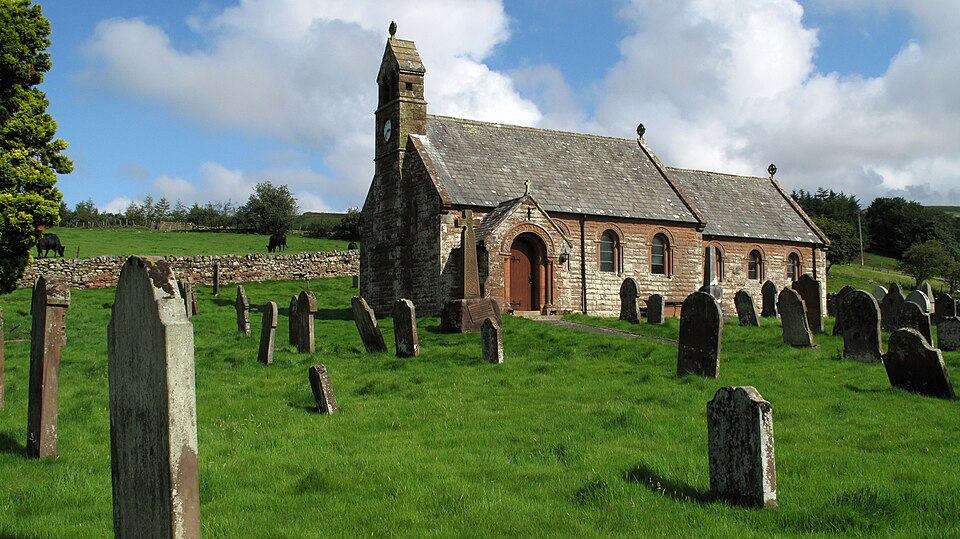
A story outside the family home
Augustus Hare did not claim to have seen the Croglin vampire himself. In his autobiography he transmitted a story told by Captain Fisher. Fisher began with his family's antiquity and an unusual single-storey house in Cumberland: the owners had moved south and rented their former home to two brothers and their sister. The newcomers pleased their neighbours, passed a happy winter and enjoyed the district. This reassuring introduction places the subsequent terror in the lives of sensible and respected people. The account supplies no independently presented medical record or examination report for the supposed victim.
Opening a window from outside
After an exceptionally hot day, the sister remains awake in bed. Her shutters are open to the lawn, trees and moonlight. Two lights appear among the trees, and gradually an approaching shape becomes distinguishable. She wants to reach the door but cannot make herself cry out. A shrivelled face appears at the window. Scratching gives way to a picking noise as the intruder removes the lead holding a small diamond-shaped pane. A finger reaches through, turns the catch and opens the window. The visitor seizes her hair and bites her throat. Hearing her scream, the brothers break through the locked bedroom door and find her unconscious; one pursues the fleeing figure towards the churchyard wall.
Returning after Switzerland
Within the frightening story, the sister initially offers an ordinary explanation: a dangerous person may have escaped from an asylum. The doctor advises a change of surroundings, and the family travels to Switzerland. In autumn she persuades her brothers to return, reasoning that their lease still has years to run and such an extraordinary accident need not recur. She now shuts the shutters, although an upper pane remains visible. The brothers move opposite her room and keep pistols ready. The following spring the familiar scratching returns. This time they rush outside, wound the figure in a leg and watch it disappear into an old vault.
A wound provides the ending
The vault is opened before witnesses the next day. In Fisher's version it contains broken coffins and disturbed remains, with a single intact, dried body. A recent pistol wound supposedly marks its leg. This matching injury joins the nocturnal intruder to the corpse and solves the puzzle according to the narrative's own rules. The body is burned. Readers nevertheless receive a finished story passed through two narrators, rather than separately recorded accounts from the people supposedly present. The decisive physical clue exists only within that transmitted account.
Comparing the changing address and date
Chelsea Eddy-Waland's research traces Charles Harper's objections to the house name, distance from the church and description of the vault. She also observes that a later dating of the attacks to the mid-seventies conflicts with Hare's earlier journal entry recording his conversation with Fisher. No encounter year is therefore assigned here. Similarities to Victorian vampire fiction explain part of the story's literary appeal without independently proving direct borrowing. The transcription, the autobiography's library record and the academic critique illuminate different aspects of textual history. They are not three independent witnesses to a vampire attack.


