Several nights, rather than one object
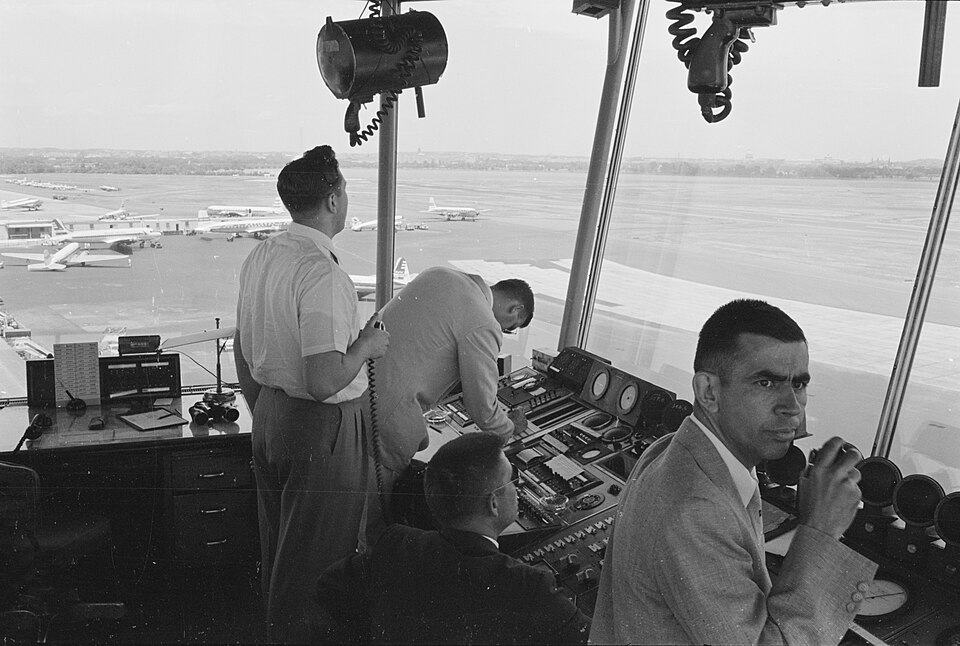
The Washington case belongs to the July 1952 wave of reports. A CIA historical study describes radar returns on 19–20 July and their reappearance on 27 July around Washington National Airport and Andrews Air Force Base. Interceptors were sent to investigate, but an unknown craft was not established. Our marker identifies the capital region, rather than a verified flight position or a landing near government buildings.
The year filter assigns this record to 1952, when the reports were made. A later archive article does not create a new observation. Separate nights should not automatically be joined into a route followed by the same physical object.
What the official records preserve
The US National Archives holds Project Blue Book material, including reports, questionnaires and images. A document's presence in a government archive establishes its provenance as an investigative record, rather than the truth of every witness interpretation. Reading a case requires separating an initial account, a specialist assessment and a later public retelling.
The programme's questionnaires asked about the observer's position, movement, sound and appearance. Those details are valuable for comparison: two reports of “lights” may concern different directions, times and elevations. A popular headline often removes precisely those distinctions.
Why a radar return is not yet a vehicle
Radar measures a returning radio signal. A screen display becomes the track of a particular object only when successive echoes have been reliably associated. If one return disappears and another appears elsewhere, calculating an enormous speed assumes they represent the same target. That assumption requires testing; it is not independent evidence of an extraordinary propulsion system.
Conversely, a return should not be declared an error in advance. Station settings, scan timing, weather and any connection with independent observations matter. The shared label “UFO” does not guarantee that every record has the same evidential quality.
What the civil aviation investigation examined
Civil Aeronautics Administration Technical Development Report 180 was published in May 1953. Its detailed Washington observations come from August 1952. The authors compared radar targets, equipment characteristics and atmospheric conditions, associating most of the targets they studied with ground returns under conditions closely connected with temperature inversions.
This provides a substantial source for evaluating a mechanism that can produce misleading targets. But an August investigation is not a frame-by-frame recording of July's episodes. Applying its conclusion to a particular July return requires demonstrating comparable conditions, rather than merely matching the city name.
Separating public impact from physical evidence
The CIA history describes administrative concern and a rapid public response. These explain the scale of discussion, but government attention does not determine a signal's physical origin. Likewise, an interceptor launch establishes that a report was investigated, rather than that a pilot confirmed an unusual vehicle.
The most useful further analysis would connect time, a specific radar station and a visual object within one consistent sequence. Until each detail has that connection, retaining different levels of confidence is more defensible than turning the entire wave into a single spectacular story.


