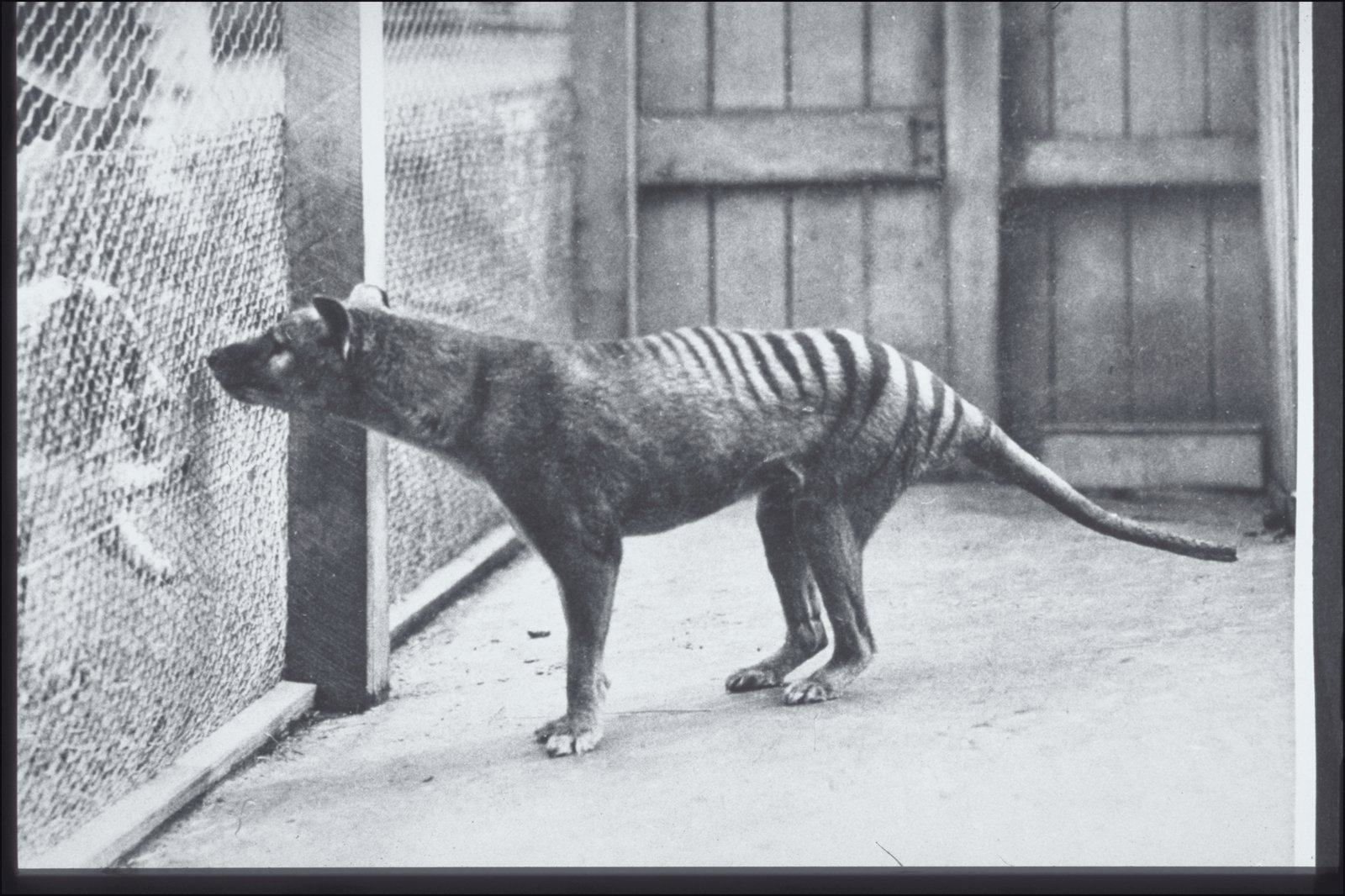
An animal before the camera
In December 1933 naturalist David Fleay filmed a thylacine at Beaumaris Zoo in Hobart. The black-and-white sequence shows the animal pacing its small enclosure, pausing, lying down and opening its mouth widely. These movements made an extinct marsupial predator familiar to generations of viewers who could never see it alive. Its back stripes explain the name Tasmanian tiger, although it was a marsupial species rather than a true tiger.
Fleay's original material is silent. An open mouth cannot restore the animal's voice, and a later soundtrack does not become part of the original evidence. This matters when brief excerpts circulate without their filming location, date or maker. The familiar images document a captive animal rather than an encounter in the wilderness.
A forgotten travelogue
In 2020 Australia's National Film and Sound Archive released another twenty-one seconds. Researchers Branden Holmes, Gareth Linnard and Mike Williams of the Tasmanian Tiger Archives had located the material in Tasmania the Wonderland. The discovery took place within an old travel film. It was not a modern sighting of a surviving thylacine. The animal appears walking calmly beside its enclosure fence, while people at the edge of the frame attempt to provoke a response.
The archive confirmed filming in 1935. Other scenes provided dating evidence, including a Derwent River regatta and the visit of the steamer Tacoma Star to Hobart. Filmmaker Sidney Cook is considered the probable camera operator, but the surviving version lacks its final credits. Separating a confirmed year from a probable attribution preserves the actual strength of the archival identification.
Three dates with different meanings
The latest known moving images of the species consequently belong to 1935, rather than Fleay's much more familiar 1933 material. Public release of the rediscovered sequence occurred in 2020. The last confirmed captive thylacine died on 7 September 1936. Confusing filming, release and death would turn an important archival story into a misleading claim that an extinct animal had returned.
The archive subsequently presented a colorized version of Fleay's film. Specialist Samuel François-Steininger used historical references and digital processing to add color. This can make the animal more immediate to present-day audiences, but it is not an independent color measurement recorded at the filming session. The original monochrome film remains a distinct historical source for comparison.
Comparison with survival reports
Unlike later accounts of animals allegedly seen in the wild, these films have an identifiable setting, archival provenance and a dating history that researchers can investigate. They establish that a real thylacine stood before the camera and preserve aspects of its appearance and movement. They establish nothing about a present-day wild population. Their importance lies in refining the final visual record of the species and preserving behavior that a mounted skin or illustration cannot convey. Recovering a later historical sequence changes the archive without changing the extinction evidence.


