Calls from northern Tehran
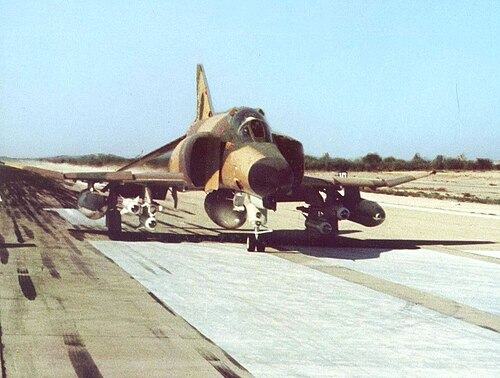
During the early hours of September 19, 1976 residents of Tehran's Shemiran area reported strange lights to Iranian military personnel. The American message preserving the episode includes descriptions of something birdlike and a brightly illuminated helicopter. An officer initially suggested stars, then looked outside and noticed an unusually brilliant source himself. An F-4 was dispatched from Shahrokhi air base. This is the content of a subsequent US defense-attaché report based on information received about the incident. It is not a continuous American observational log of the night sky.
The first sortie
According to the report, the first fighter took off around 1:30 a.m. The supposed target's brilliance made it visible at a substantial distance. At approximately twenty-five nautical miles, the crew reportedly lost instrument indications and communications. They turned toward base and the systems recovered. Later retellings often convert this sequence into proven remote suppression of electronics. The document itself reports a failure coinciding with an approach. The available collection does not contain an independent technical recording measuring an external source that produced the malfunction. The distinction matters even when the crew's experience is accepted as sincere.
The second interception
Another F-4 was sent to investigate. Its account includes radar lock on a brilliant target and an apparent maintenance of separation as the aircraft approached. Intense light prevented a useful estimate of physical size. A smaller luminous object then reportedly detached and moved toward the fighter. The pilot attempted to use an AIM-9 missile but described failure of the weapons panel and communications before turning away. This is not a documented missile launch or a battle with verified damage. Comparison of radar-return strength with a large aircraft also does not measure the actual diameter of the unknown source.
Light near the ground
The narrative subsequently describes another light descending toward the ground and illuminating an area without the anticipated explosion. Further interference and an additional object on the landing approach were reported during the return. The following day a helicopter examined the supposed descent location. Captain Henry Shields's published account describes a dry lakebed where nothing unusual was noticed. A radio signal led searchers toward a nearby house, whose inhabitants recalled a noise and a bright flash overnight. The article supplies no results from proposed further tests. Recovered material or a retrieved craft cannot therefore be added to its ending.
How the account entered archives
The American message circulated through military and intelligence channels. Copies and Shields's article later became accessible through declassification and Freedom of Information requests. An NSA-hosted reproduction also explains that the impressive distribution list did not establish a special investigation by every recipient: reporting from a sensitive region was routinely distributed widely. Favorable appraisal of the account's quality concerns its interest and sources. It is not a laboratory determination of the lights' origin. Preserving an official report and identifying a physical phenomenon remain different achievements, even when the report is extensive and striking.
Comparing the sources
The attaché message, military article and later pilot narratives share a reporting history. Repeated details among them should not be counted as several independent instrumental confirmations. The collection does establish serious military attention to unusual reports. It does not provide a complete original radar recording, diagnostic logs for both aircraft and the results of every proposed ground examination needed for a confident reconstruction. The case is therefore best presented as a documented account of unsuccessful interceptions and alleged equipment failures. The source of the lights remains uncertain; extraterrestrial electronic suppression goes beyond what the available evidence establishes.


