After the flood of reports in 1952
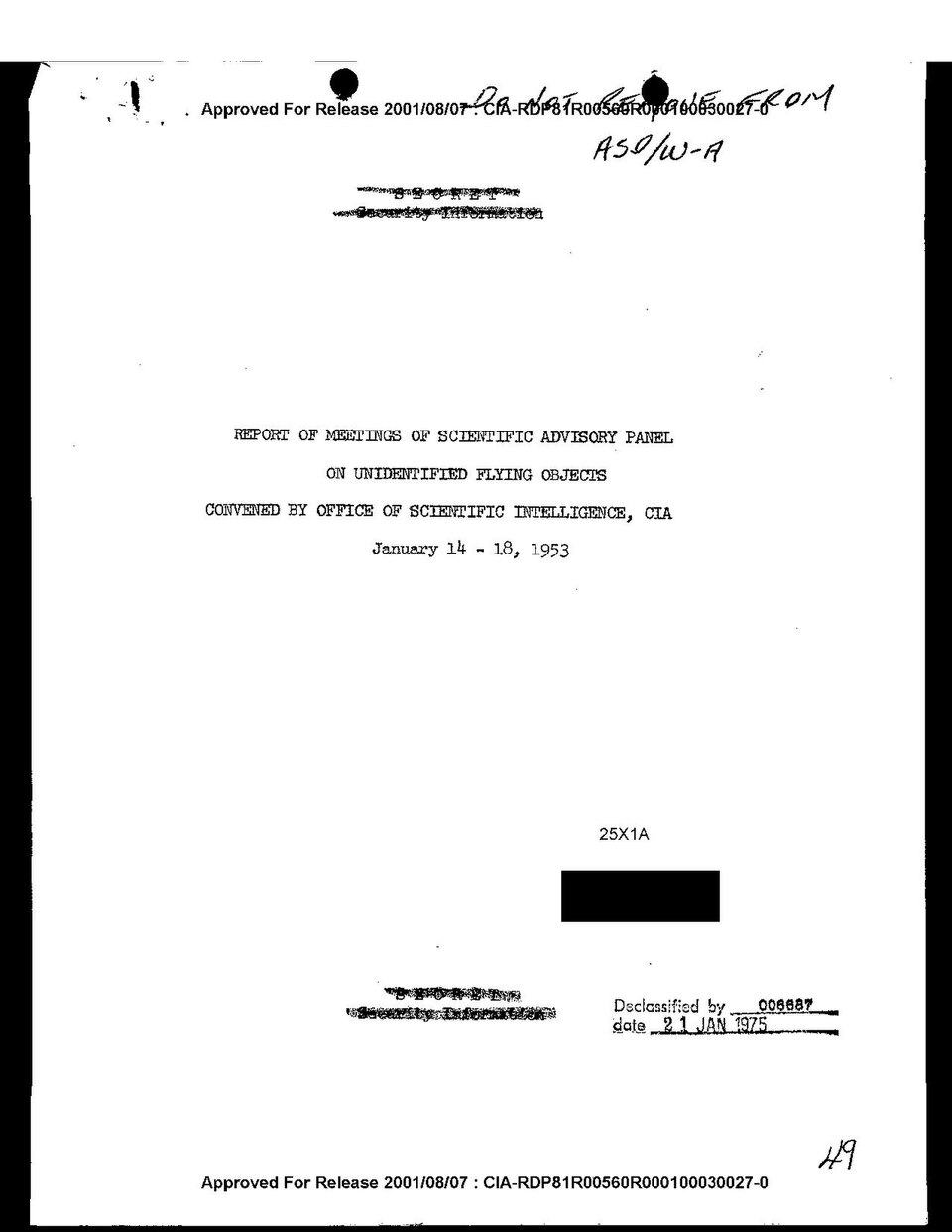
During the summer of 1952 American agencies faced another surge of unusual-aircraft reports. For the CIA, the issue extended beyond the nature of individual lights. In the Cold War, false alarms could occupy communications, distract operators and complicate recognition of a real attack. Intelligence leadership therefore requested scientific assessment of the accumulated material. A small panel chaired by physicist Howard Percy Robertson assembled in January 1953. Its task was a rapid review of available evidence and possible consequences, rather than an independent, multiyear field-investigation program.
Who sat around the table
Participants included specialists in different areas of physics, among them Luis Alvarez, Samuel Goudsmit, Lloyd Berkner and Thornton Page. Military representatives described how reports were gathered and evaluated. Materials were assigned according to expertise: radar, fireballs, nocturnal lights and photography. Meetings occupied several days. That limited scope matters when interpreting the outcome. The panel could criticize selected examples and methods, but it could not observe every original event again. Distinguished scientific membership did not turn retrospective examination into a missing original experiment.
Two films became a central example
The panel watched the 1950 Great Falls and 1952 Tremonton films. Navy photographic specialists presented analyses that generated detailed discussion. Participants considered solar reflections, birds, possible aircraft and the validity of inferences from brightness. They specifically noted work performed on a duplicate rather than the original and missing film-characterization information. These observations reveal the technical substance of the meetings. The panel also rejected any assumption that superficial resemblance meant the two films depicted the same kind of object. Their locations, circumstances and possible explanations differed.
The principal fear was organizational
The findings did not establish a direct threat from extraordinary vehicles or a need to revise physical science. Nevertheless, the continuing volume of reports was treated as a possible threat to protective systems' functioning. Discussion covered overloaded communication channels, desensitization to false alarms and an adversary's potential exploitation of public anxiety. This is narrower and historically more intelligible than the familiar claim that intelligence officials were frightened by aliens. The documents focus on how people and organizations react to reports even when the reports themselves have ordinary causes.
Education, debunking and secrecy
The panel recommended educational and explanatory material distributed through mass communications. Its documents show an intention to reduce the mystery surrounding reports by demonstrating recognizable explanations; attention to private UFO organizations was also discussed. This element deserves historical scrutiny because scientific assessment was combined with management of public reaction. The CIA also restricted knowledge of its own role for a considerable time. A later agency historian's account traces that administrative behavior. Proposals to influence audiences do not, however, establish that the panel possessed secret confirmation of extraterrestrial spacecraft.
Comparing the sources and conclusion
Proceedings and recommendations reveal the discussion, the later CIA history traces institutional developments, and archival material connects the episode with Air Force investigations. They should be read together while separating technical findings from communications policy. The panel did not identify every light, but found no presented evidence of exotic technology. Our assessment is a documented episode of brief expert review and Cold War information policy. The review's limits can be criticized through methods and data; criticism alone does not create independent evidence for whichever alternative explanation someone prefers.


