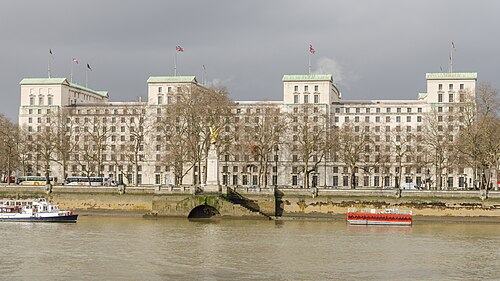
A question for Defence Intelligence
In the late 1990s Britain's Ministry of Defence reconsidered what its accumulated reports of unusual aerial phenomena could contribute. A classified review known as Project Condign culminated in the 2000 document Unidentified Aerial Phenomena in the UK Air Defence Region. This was not an encounter report for a particular evening. It was an assessment of heterogeneous reporting. The year therefore denotes completion of a document. Public release in 2006 belongs to a different stage of its history and should not become the date of an alleged appearance by unknown objects.
What counted as a useful answer
The Ministry's explanation preserved with the released study identifies the main objective as assessing a possible threat to Britain. A secondary question concerned technologies potentially useful to the military. This remit explains the analytical emphasis: origin, flight safety and intelligence value mattered alongside the strangeness of an account. A conclusion that no threat had been demonstrated does not mean the author personally reconstructed every scene. It answers an institutional question using available material and is different from a universal physical explanation of every report in the collection.
An unusual natural hypothesis
Among the most discussed passages were suggestions involving rare luminous plasma formations. The author associated such mechanisms with apparent motion, unusual shapes and reported effects on observers. The study also considered familiar misidentifications of natural phenomena and human aircraft. It did not, however, provide measurements of a particular stable plasma body for every relevant case. The proposed scheme is an interpretation and possible explanatory direction. Official classification establishes the document's institutional provenance; it does not substitute for experimental tests of the mechanism or a reproducible identification of each observation.
The report leaves classified circulation
The material became publicly accessible in 2006 following a freedom-of-information request. The Black Vault preserves a combined copy containing the executive summary and main sections. David Clarke's later research notes place the report within Britain's documentary history. An Information Commissioner's decision also explicitly connects memorandum 55/2/00 with DI55's work and December 2000. These records make the text's existence and administrative identity verifiable. They do not make every hypothesis of its anonymized author a scientific consensus or the result of an independent commission examining newly collected physical evidence.
Why interpretations diverged
Readers with different positions found useful phrases in the report. Some emphasized acknowledgement of unusual phenomena; others emphasized the absence of evidence for intelligent extraterrestrial or foreign origin. Detached from the assessment's remit, either emphasis can create excessive certainty. A genuine report, a genuine physical stimulus and a correctly identified cause are three different propositions. An analyst can regard some accounts as natural effects while lacking sufficient information to identify each individual episode. Popular retellings frequently erase precisely this gap between an overall assessment and a demonstrated explanation of one event.
Comparing the documents
The released memorandum supplies the author's argument, the Ministry's explanation supplies the remit, and archival and oversight records establish provenance and chronology. Clarke and Gary Anthony's critical discussion helps expose the disputed plasma reasoning. Agreement between these records establishes a real government study, rather than the physical truth of every suggested explanation. The entry consequently retains a review classification. Absence of an identified defence threat can be reported as the study's conclusion. Plasma mechanisms should be presented as its hypotheses, requiring other observations and testing before becoming explanations for particular sightings.


