An expedition carries a movie camera
On 20 October 1967 Roger Patterson and Bob Gimlin said they were riding along Bluff Creek in northern California. They had selected an area already associated with large footprints and intended to obtain images of Bigfoot. Patterson had previously written a book about alleged North American snowmen and carried a sixteen-millimeter movie camera. This background matters: the participants were searching for a particular creature rather than casually recording woodland scenery. The Bigfoot Field Researchers Organization presents their account as an encounter with an animal. Its compilation documents the proponents’ position rather than providing an independent identification of the filmed subject.
A short walk across an open area
According to the BFRO account, Patterson’s horse reacted in alarm, after which he freed himself and began filming the retreating figure. Gimlin remained nearby with a firearm. In the familiar sequence a hairy biped crosses an open stretch and turns its head toward the camera. That look back helped make the footage a cultural icon. The image unquestionably exists; the argument concerns who or what appears before the lens. Statements about the horses and events before filming derive from the participants’ testimony. Every such detail cannot be treated as independently demonstrated by the short surviving sequence itself.
Tracks and measurements afterward
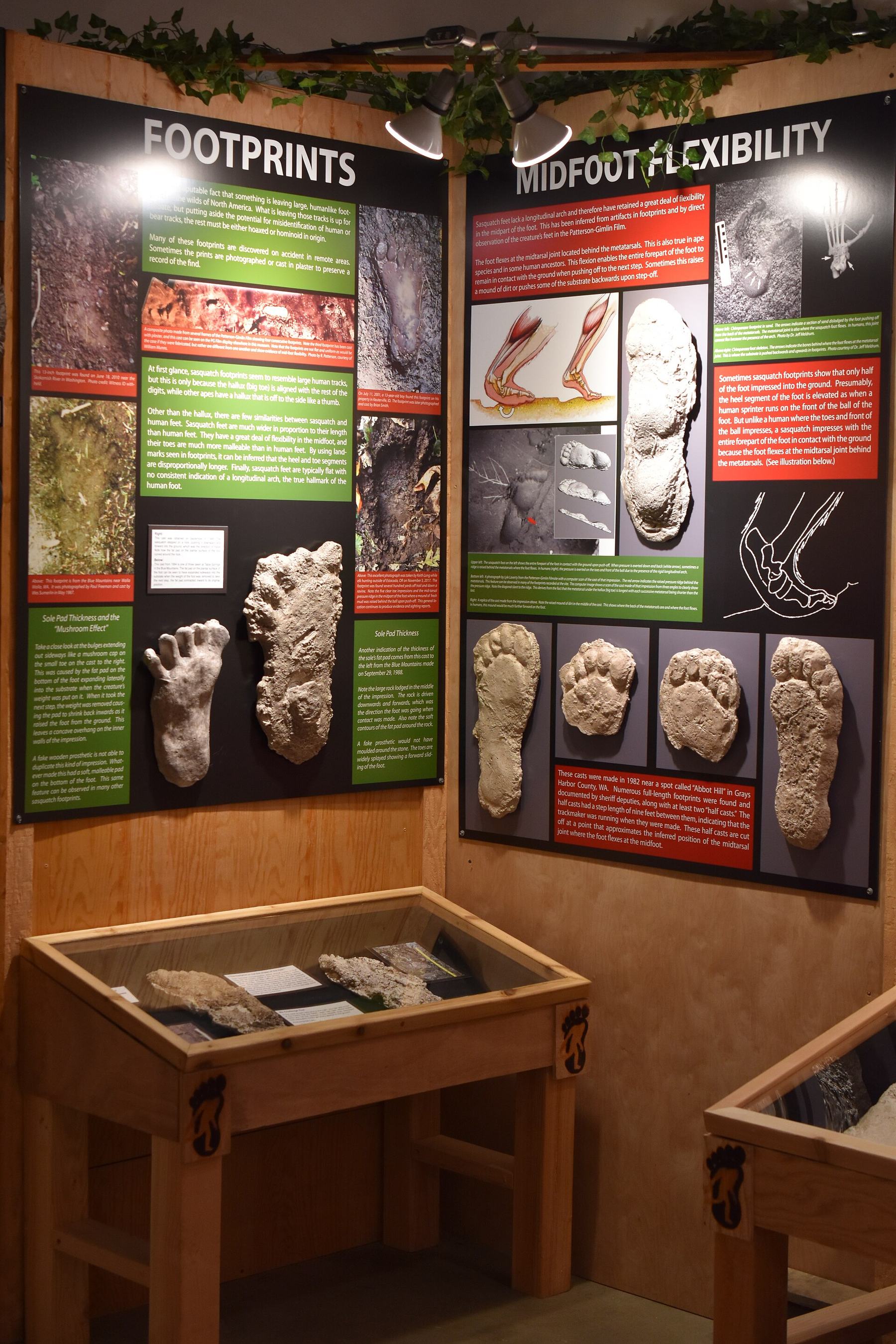
Supporters reported that investigators returned to the location and measured tracks used in estimates of the figure’s height. BFRO supplies specific figures, but calculations of this kind depend on reconstructing distances, perspective and camera position correctly. They are not direct measurements of an animal standing beside an observer. The film became a continuing dispute between advocates of an unknown primate and proponents of a person wearing a costume. Both groups examined gait and proportions, often through copies of differing generations. Repeated copying also made it harder to distinguish a small supposed anatomical detail from grain, blur or physical damage to the medium.
Computer restoration revisits the sequence
A 2022 paper by Isaac Tian, Bill Munns and Jeff Meldrum describes stabilization and compositing from eight film copies. The authors explicitly acknowledge the absence of the camera original and examine 150 frames surrounding the celebrated look back. Their processing aims to reduce camera movement and copying defects while preserving available detail. The paper is useful as a technical account of methods and limitations, although its authors favor the unknown-primate interpretation. A steadier and clearer presentation does not thereby become a new independent viewpoint, a genetic specimen or the body of the alleged creature.
A document and the limits of discovery
The footage is an authentic historical object of controversy, but its existence does not establish Bigfoot as a biological species. BFRO supplies the participants’ narrative, the technical paper explains how copies can be improved, and Smithsonian historical coverage places the episode within a larger search culture. Those sources address different questions. Stabilization may clarify visible movement without eliminating uncertainty about the subject and its provenance. A failure to reach a universally accepted costume demonstration would not independently prove a new species either. The entry consequently classifies the film as an unverified encounter document and avoids asserting an exact coordinate beyond the regional Bluff Creek association.


