What villagers told the commission
The 1732 investigation at Medvedja is known by the Latin title Visum et Repertum. Its central name appears in several forms: Arnaut Paole, Arnold Paole and Arnald Paul. Military specialists arrived after reports of deaths attributed to vampires. Village elders and military settlers began their explanation with events approximately five years earlier. They said that Paole had died after falling from a hay wagon. During his life he supposedly described being troubled by a vampire on the Ottoman side of the frontier. To free himself, he allegedly ate earth from its grave and smeared himself with its blood. This was retrospective village testimony, rather than a procedure conducted by the arriving commission.
The first destruction of a body
Several weeks after Paole’s death, neighbours reportedly complained of visits from him; four deaths were attributed to his actions. According to the informants, they exhumed him around the fortieth day and considered the body exceptionally well preserved. They described fluid on clothing and in the coffin, together with changes to the skin and nails. Following the community’s decision, a stake was driven through his chest and the remains were burned. The bodies of the four supposed victims received similar treatment, to prevent further transmission. Investigators arriving years later could not inspect Paole’s already destroyed remains. This distinction matters whenever the case is advertised as a medical autopsy of the famous vampire himself.
Why the fear returned
A new series of deaths challenged the earlier remedy. If the dangerous corpses had been burned, where had the subsequent visitors come from? The inhabitants proposed transmission through livestock: Paole supposedly attacked animals whose meat people later consumed. Calmet’s compilation also relates Stanoska’s account of waking in terror and complaining that another deceased person had attempted to strangle her. Such narratives explained why suspicion spread from one grave to several. They were not observations of a hidden transmission mechanism. The mechanism was inferred within an existing conviction that the cause of illness and death should be sought among the buried.
Examining the newer graves
Unlike the earlier episode concerning Paole, the commission described subsequent exhumations as its own work. It listed deceased people, intervals since burial and the condition of their remains. Some bodies were classified as showing vampirism, while others were regarded as ordinarily decomposed. After examination, those judged dangerous were decapitated and burned, with ashes thrown into the river. Military and medical participants formally signed the report. Copies and printed retellings made the village crisis a subject of European discussion. Names, geography and numerical details changed across compilations, so their contents should not be mechanically combined into one supposedly exact transcript.
Comparing the report with Calmet’s retelling
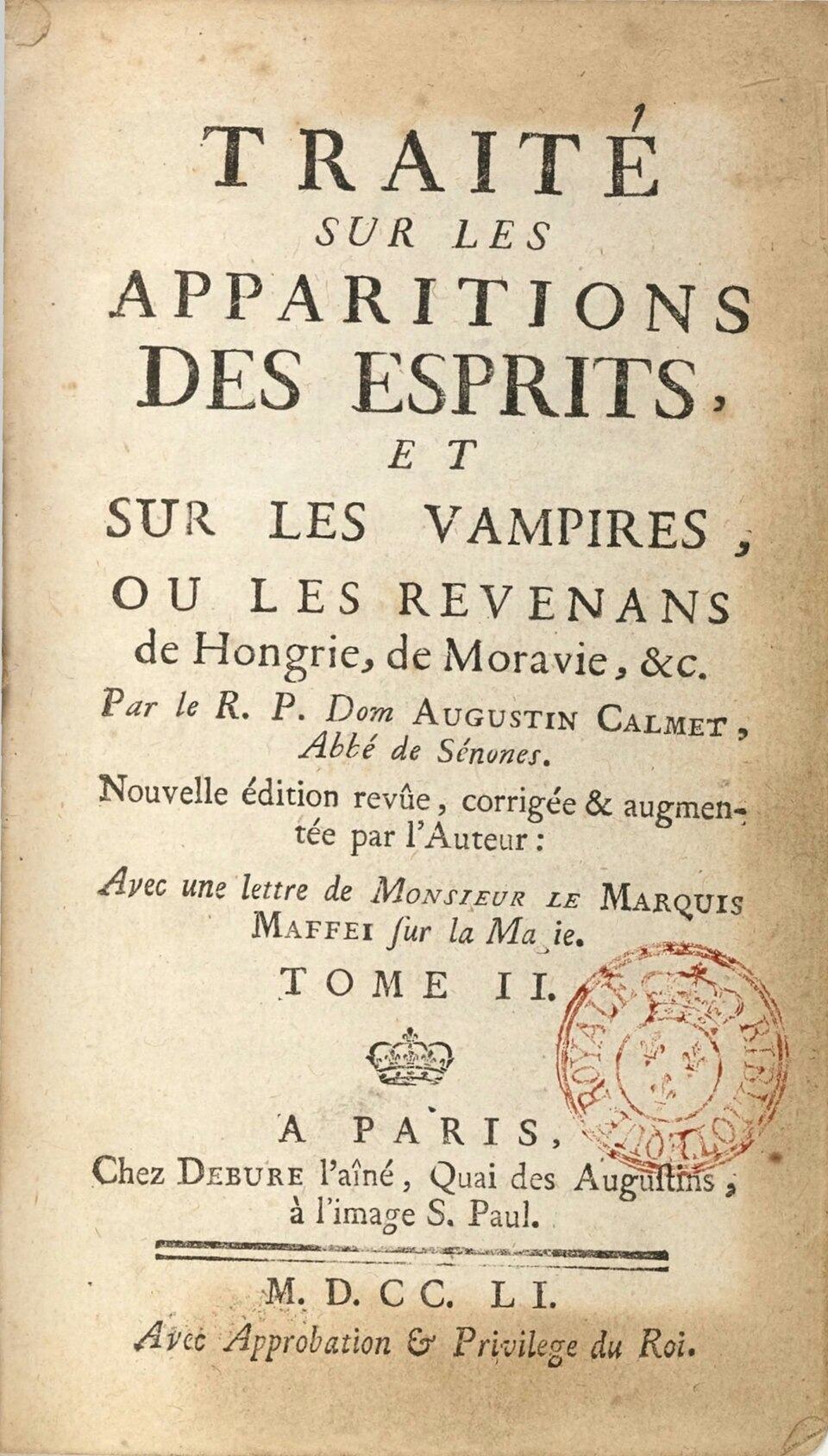
A surviving 1732 edition establishes the early printed corpus. The translated report distinguishes testimony about Paole from bodies examined later. Calmet represents another stage of discussion, including contemporary sceptical arguments about fear and fluids within remains. University scholarship analyses translation and administrative transmission. These sources do not constitute four independent observations of reanimation. The record assigns 1732 as the investigation year. The expression approximately five years earlier is not converted into a precise death year, and a historical village name is not treated as a coordinate identifying Paole’s grave.


