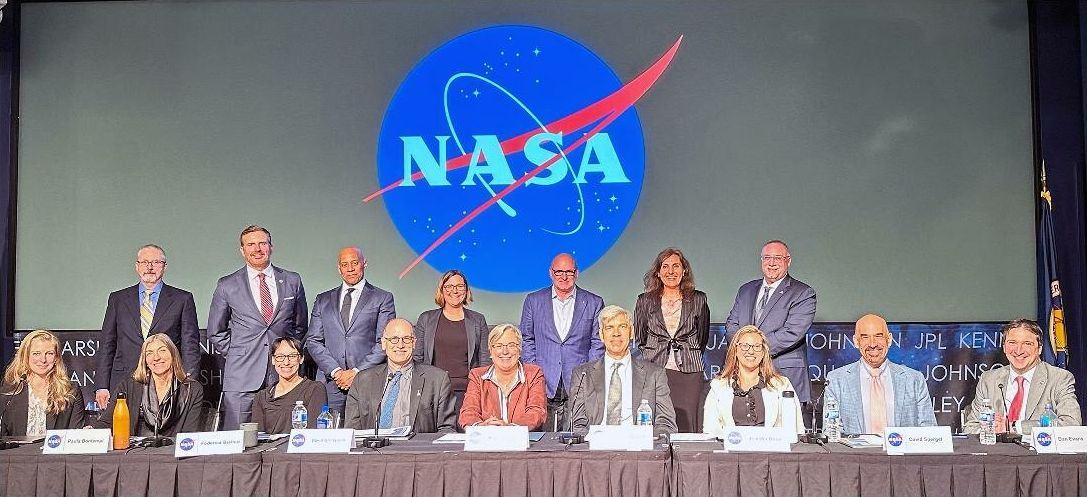
14 September 2023: a report about research methods
NASA's independent study report was often approached as a promise to identify the origin of every unusual object. Its actual task was specific: determine which data and scientific approaches could improve the study of UAP. Published on 14 September 2023, the report used unclassified material. It is not a catalog of definitively reconstructed military encounters. Its value should therefore be assessed through the research framework it proposes, rather than through the presence of a sensational answer that the team did not claim to have delivered.
The main shortage: measurements without context
The report identifies gaps in calibration, metadata and simultaneous independent observations. A video can be authentic while still failing to establish distance, size or speed. Even several reports may not solve the problem if it is unclear whether they concern one target or whether their clocks agree. For example, two people can report seeing a point of light without providing the precise time and direction needed for triangulation. Missing context, rather than a shortage of striking stories, becomes the practical obstacle to a reproducible physical analysis.
What NASA could add to another observer's report
The proposed contribution includes expertise with calibrated instruments, large archives and environmental measurements. A satellite need not resolve a small object to help: atmospheric and weather information may still test an interpretation. Commercial imagery could also contribute when collection happens to coincide with an event, although continuous detailed coverage of the entire Earth does not exist. References to satellites should therefore not be read as a claim that NASA already holds uninterrupted video of every unusual object or can immediately reconstruct any encounter from decades ago.
Why reporting and trust are scientific concerns
The team treats stigma as a cause of missing reports. If pilots expect ridicule or professional consequences, an organization receives an incomplete sample of events. Improving reporting therefore has practical value regardless of an object's eventual identity. Respect for witnesses does not require accepting every interpretation without examination. A useful system preserves the initial account, instrument information and subsequent corrections separately. The observer's confidence remains relevant context, but it cannot replace the distance, timing and other measured quantities needed to calculate physical behavior. Better reporting improves the opportunity to investigate rather than predetermining the answer.
GOFAST and the limits of automated analysis
The GOFAST example illustrates how numerical display information can change an initial impression: the target need not be racing just above the sea at an extraordinary speed. The authors also state assumptions in their approximate calculation. This is a limited technical finding, not a definitive object identification. Similarly, recommending machine learning does not mean an algorithm can determine an unknown origin from any indistinct patch. Without well-characterized data, it may merely organize existing errors. Automation becomes valuable after the measurable task and an independent way to evaluate its results have been defined.
Editorial assessment: testability matters more than a label
NASA did not present confirmation that UAP are extraterrestrial. Equally, the report does not establish that every unresolved case already has a known explanation. Our assessment is that its most valuable shift is attention to the conditions needed to distinguish competing accounts. A testable finding should provide underlying data, uncertainty and an observation capable of falsifying the explanation. The team's 2023 recommendations must also be distinguished from their later implementation. Proposing a collection system is not evidence that all the necessary measurements have already been gathered, analyzed or made public.


