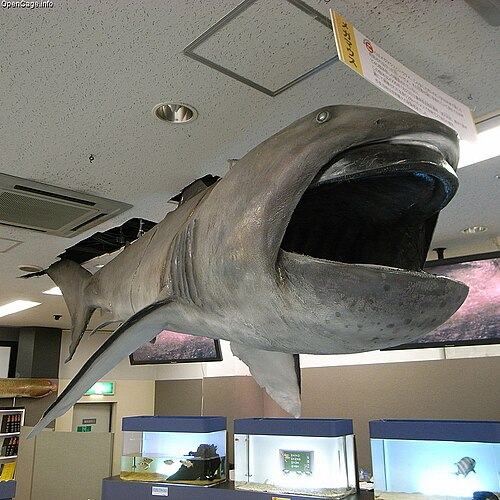
An unexpected load from the deep
On 15 November 1976 a United States Navy research vessel was operating in deep water near northern Oahu. Large parachute-like sea anchors helped hold equipment in position. Such devices provide drag in the water; they are not conventional heavy anchors resting on the seabed. When one was recovered, the crew discovered that a substantial animal had become entangled. Hawaii's natural-resources department describes a shark approximately four and a half metres long, with an enormous head and mouth. The encounter occurred during technical work, rather than through a sustained expedition searching for a legendary sea creature.
A shark the specialists did not recognise
The animal died. The crew struggled to bring the heavy body aboard and transported it to a laboratory near Kaneohe. Local marine biologists were summoned, and shark specialists elsewhere were consulted. Size alone was not the puzzle: the combination of features did not match a known species. Waikiki Aquarium director Leighton Taylor was among the early researchers. The nickname megamouth quickly reached the press. Crucially, a preserved body allowed investigation to continue beyond the astonishment of people on deck. Teeth, tissues and internal anatomy could be compared with other sharks, and samples could be studied by additional specialists.
A huge mouth did not imply attacks on people
Examination of its mouth and stomach contents revealed feeding on small marine organisms, especially crustaceans. The Hawaii account identifies megamouth as another plankton-feeding shark alongside whale and basking sharks. Its dramatic appearance therefore differed from the familiar picture of a large predator attacking everything nearby. Formal description took several years: Taylor and colleagues published the name Megachasma pelagios in 1983. The researchers distinguished a new species, genus and family. The interval between capture and publication contained anatomical work on a real specimen. It was not a period during which an extraordinary encounter remained supported only by recollection.
Eight years before a second specimen
The second known capture occurred off California's Santa Catalina Island in 1984. That interval illustrates how rarely a large ocean animal can encounter scientific observers even after a successful discovery. Later museum accounts connect megamouth behaviour with movement between deeper and shallower layers while following food. That reconstruction should not all be attributed to the original dead specimen. The holotype, the reference specimen underpinning the scientific name, entered the Bishop Museum in Honolulu. Its preservation makes it possible to revisit the original identification independently of the newspaper coverage generated when the shark first came ashore.
What the case establishes
The Hawaii department and the Florida and Australian museums agree on the first discovery's date and importance. Popular descriptions may give slightly different masses because of rounding or unit conversion; these differences do not undermine the species' existence. Here was a large animal overlooked by scientific study that subsequently left accessible material. Today it is not an unverified cryptid. The archive includes it for the unusually clear sequence: an unexpected encounter, preservation of a body, anatomical investigation and additional specimens. That chain is substantially stronger than a lone account of a dark shape below the water and requires no supernatural explanation.


