Where and when the spiral appeared
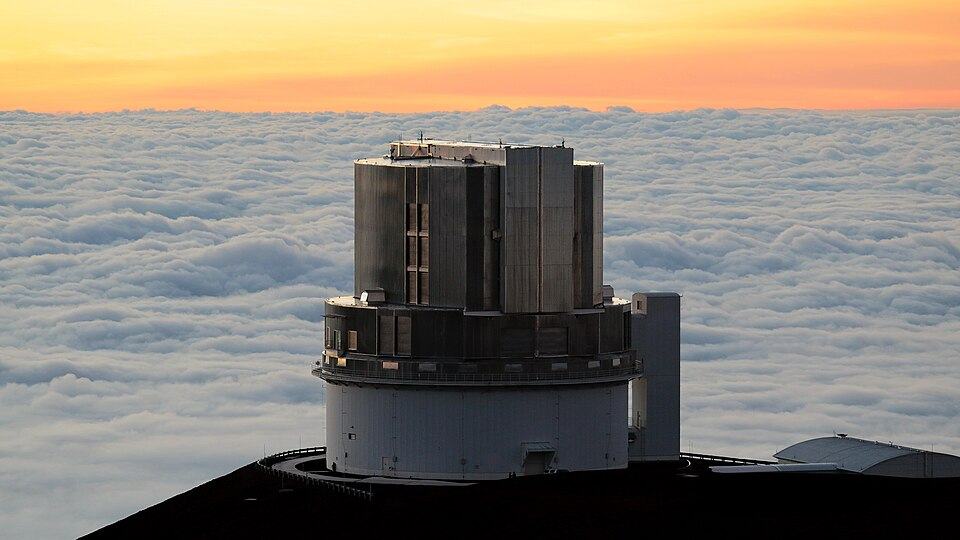
Early on 18 January 2023, local Hawaiʻi time, a camera on Maunakea recorded an expanding spiral in the dark sky. The observation belongs to Hawaiʻi although the associated launch took place in Florida. This distinction matters on a map: the pin marks the camera, rather than the launch pad or a calculated release point above Earth.
The original record and the launch
The Subaru–Asahi camera provides a continuous sky livestream near the observatory. Its high sensitivity and the dark background made the structure particularly visible. The observatory published an explanatory note on 1 February, connecting the spiral with satellite deployment following a SpaceX launch. This information came from the astronomical institution responsible for the imagery, rather than an anonymous repost of a video.
A separate Space Systems Command release confirms the Falcon 9 launch of GPS III SV06 on 18 January. NASA's annual space-activities record also lists the launch. These documents establish a real technological event that can be compared with the recording. A launch merely sharing the date is not sufficient, however: timing, direction and the stage's position must also fit.
Why a cloud can look geometric
In the rocket interpretation, sunlight illuminates material released at high altitude. A rotating source can distribute material in a spiral pattern. This explains the formation of the visible cloud; it does not mean the rocket's body was itself an enormous spiral. The shape of dispersed material and the source's construction are different things, easily confused in a short video.
A dark sky at the observer's location is compatible with sunlight at much greater altitude. The cloud therefore does not require a star-like internal energy source. Nor can brightness changes be translated directly into acceleration or disappearance into another space without further geometry. An expanding cloud disperses and illumination conditions change; these ordinary processes should first be compared with the frame sequence.
What the recording establishes
The date, camera location, spiral appearance and corresponding launch are documented. Popular captions nevertheless sometimes add exact propellant composition, rotation modes or stage commands without telemetry. A single camera did not directly measure those details. The observatory's note uses cautious language about the connection, and a research summary should preserve that degree of confidence even when the overall explanation is convincing.
Independent checks benefit from the original sequence, its actual playback speed, exact timing and a calculated rocket position. Time-lapse can make gradual expansion look much more dramatic, while a crop lacking stars obscures scale. Maunakea offers an unusual but technologically understandable sky display. Explanation does not remove its interest: the record shows how sensitive astronomical cameras capture human activity far from its launch site, and how imagery should be connected with events.


