A lander and a wheeled machine
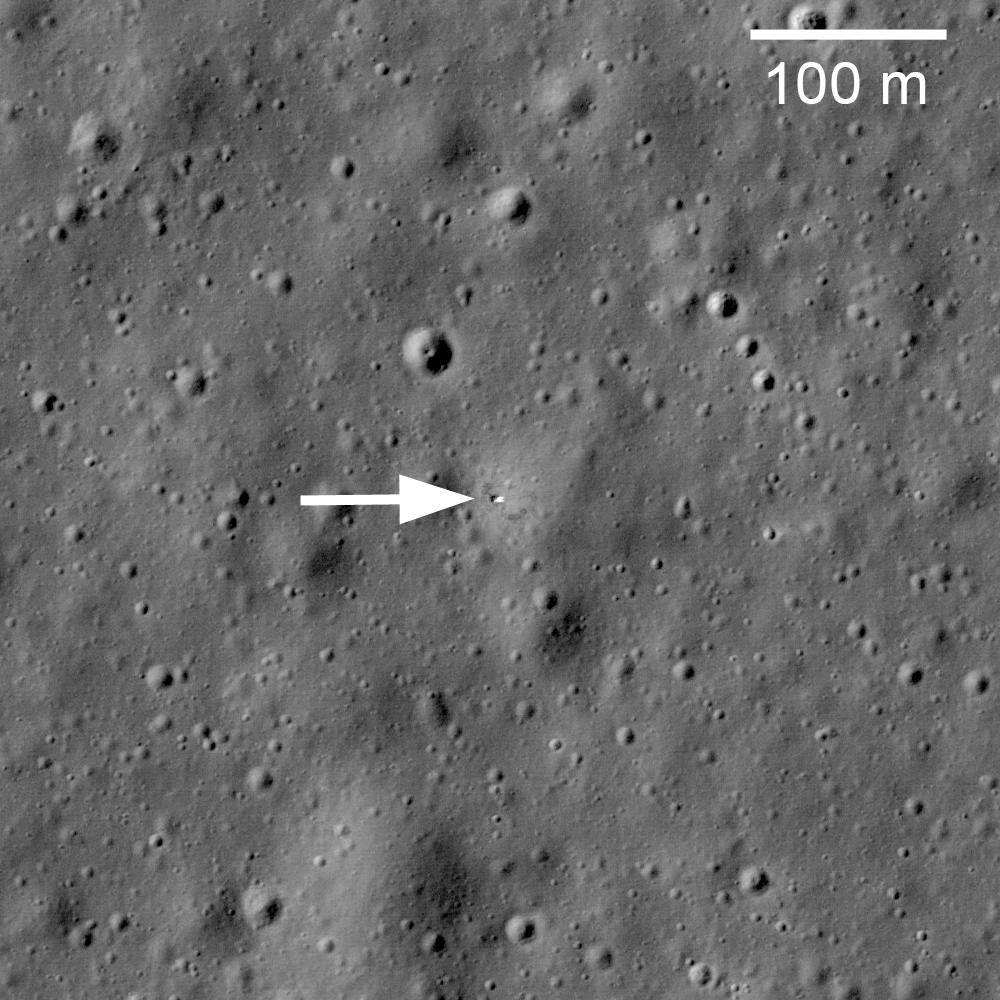
Luna 17 left for the Moon on November 10, 1970 carrying the eight-wheeled Lunokhod 1. It followed Luna 16's sample-return success but had a substantially different task: move across terrain, select observing sites and investigate the surface over several months. On November 17 its platform landed in Mare Imbrium. Two ramps offered routes down onto the soil. The globe marker here denotes the station's landing site, rather than the rover's final position after its later journeys. Confusing these two locations would make an otherwise documented route appear needlessly inconsistent.
Driving from Earth
A ground team drove the rover using television images. Communications and image-update delays complicated route selection: an operator could not react like a driver sitting beside the machine. Its eight wheels could be controlled individually, and a hinged upper lid carried solar cells on its inner surface. Daylight supplied operating energy, while the lunar night required a different thermal regime and protection of the systems. Later comparisons of the rounded vehicle with a science-fiction robot reflect its appearance. Its construction nevertheless served the very concrete requirements of remotely operating human-built machinery on the Moon.
The working traverse
During its active mission Lunokhod 1 traveled approximately 10.54 kilometers, transmitted more than twenty thousand television images and returned around two hundred high-resolution panoramas. A penetrometer investigated soil mechanics, while an X-ray instrument examined elemental composition. These operations connected the visible appearance of particular places with measurements directly beneath the wheels. The rover did not merely repeat one fixed view from a landing platform: it carried instruments between sites. Its limited traverse sampled a particular region of Mare Imbrium rather than surveying the whole lunar nearside. That local context is part of the value of the measurements.
The last radio contact
Operations continued into 1971 and covered eleven lunar working days, considerably exceeding initial expectations. NASA's historical chronology places the last communications session on September 14 and the end of attempts to reestablish contact on October 4, 1971. These dates describe separate stages: the last received session and the decision to stop searching for a signal. The vehicle did not continue independently driving for decades afterward. Losing radio contact also did not mean that every passive item fixed to its body had ceased to exist or could no longer serve any purpose.
Why researchers searched again
The rover carried a French-built laser retroreflector. It needed no active transmitter: corner-cube optical elements returned a pulse sent from Earth. In 2010 Lunar Reconnaissance Orbiter images established the rover's position sufficiently well for another ranging attempt. The Apache Point team obtained a strong reflected signal. Thomas Murphy and colleagues describe how this refined coordinates and expanded lunar-distance measurements. What resumed was the use of an optical target, rather than control of the wheels or reactivation of the old radio computer. The measurement depends on timing reflected light, not on receiving a message deliberately composed aboard the rover.
Comparing the sources
LPI catalogs establish the launch and landing region. NASA's historical chronology describes the traverse and end of radio operations, while the research paper documents the later laser result. NASA's popular account links the two eras, but figurative language about returning to life requires explanation. The driving distance belongs to the 1970–1971 mission; the renewed laser reflection is a separate event from 2010. Distinguishing the platform, mobile vehicle and passive reflector removes the apparent mystery of a robot that vanished and then spoke again. Each component has a known terrestrial origin and a testable technical history.