A summer of fear in Gevaudan
Between 1764 and 1767 animals attacked people in Gevaudan, a historical region of south-central France. Modern geography associates the case chiefly with Lozere and adjoining parts of Haute-Loire. It is not a story known only from later fairy tales: parish records, administrative correspondence and documents about organized hunts survive. Herault’s departmental archive identifies relevant holdings of the Languedoc intendancy and provincial government. A regional museum dates the celebrated sequence from 30 June 1764. Popular accounts give differing totals of victims, so this entry does not combine all estimates into a single supposedly uncontested statistic of deaths and injuries.
The pursuit becomes royal business
Local hunters and armed parties did not quickly stop the attacks. In 1765 the royal gun-bearer Francois Antoine became involved. Archivist Charles-Eloi Vial emphasizes hunting expense accounts preserved at the Bibliotheque nationale de France. They allow historians to follow movements and practical arrangements, whereas sensational prints primarily shaped imagination. Maintaining people, travel and organization cost money, and administrators evidently treated the danger seriously. The commitment of royal resources, however, establishes a campaign against attacks rather than official acceptance of a fantastic zoological identification or of a single invulnerable being. Administrative records answer questions about the response more readily than the predator’s precise identity.
Dead animals and renewed alarm
Regional museum accounts distinguish two animals killed during the affair: a large wolf and another wolf-like canid. Attacks continued after an initial celebrated resolution, so the royal hunt did not end the story. On 19 June 1767 Jean Chastel shot an animal during a hunt organized by the Marquis d’Apcher at Sognes d’Auvers. Tradition associates this episode with the end of the famous series. That sequence alone cannot assign every earlier death to the last animal killed. The possibility of multiple predators matters: a singular name may gather attacks by different animals across a substantial geographical area.
The beast on paper
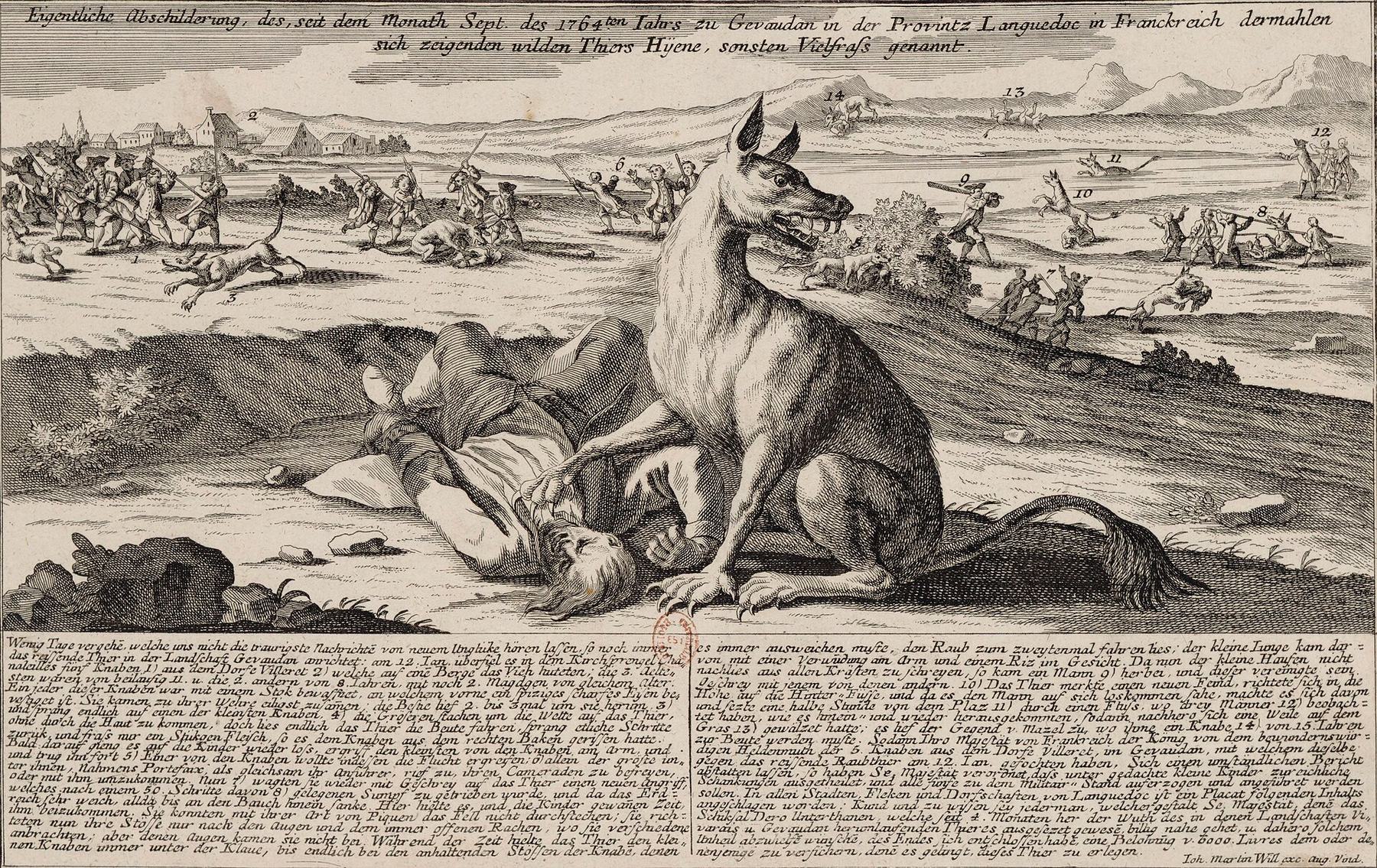
The French national museum database Joconde records a colored print published by Basset and dated after 1764. Its scene contains a woman, child, weapons and beast, illustrating how quickly the tragedy acquired a recognizable visual language. The print is genuine evidence of contemporary culture, rather than an anatomical drawing demonstrably made from a living subject. Later interpretations proposed wolves, hybrids and imported exotic carnivores; fiction added werewolves and conspiracies. As retellings moved away from administrative correspondence and parish entries, unusual appearance could become a device for a new narrative rather than a securely observed feature of an identified animal.
What the different documents establish
The archives securely support fatal attacks, an administrative response and prolonged hunts. Accounts demonstrate human activities, parish entries record deaths, and prints reveal representations of danger. None of these material types independently identifies every attacking animal. Wolves or other canids fit some historical descriptions, while the precise identity and number of predators remain debated. The absence of an accessible preserved body limits modern testing. The review classification therefore concerns identification of the beast rather than denial of the victims. A real tragedy does not become evidence for a werewolf merely because its later legend contains more detail than the surviving zoological information can substantiate.


