Universities were asked to examine selected reports
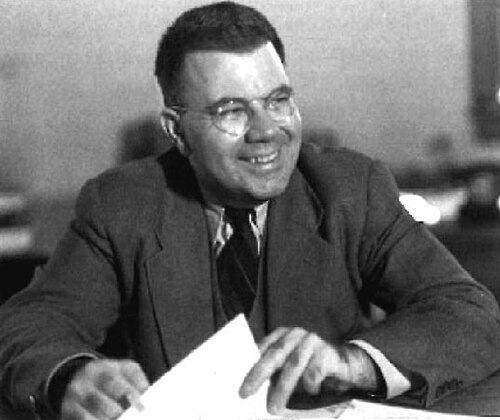
In 1966 discussion of Blue Book led to a proposal for stronger scientific investigation of selected sightings. An Air Force Scientific Advisory Board committee noted the small permanent staff and recommended involving university specialists. This produced the University of Colorado project directed by physicist Edward Condon. Its question was whether UFO reports could yield new scientific knowledge. That differed from the task of a duty office registering incoming reports: the university was expected to examine selected events, observational methods and possible explanations more deeply, rather than merely assign final case categories.
The collection extended beyond stories about lights
The investigation considered fieldwork, photographs, radar reports, astronaut observations and perception. The university archive now describes a Condon collection containing the report, Gemini flight transcripts, microfilms of UFO publications, books, journals and other material. It documents practical work with heterogeneous information. Such variety does not give every item equal evidential strength. A communications transcript, newspaper article and photographic negative answer different questions. A persistent difficulty was comparing cases whose original data quality differed more substantially than their superficial narratives.
The definition of a UFO did not assume a spacecraft
The report defined its subject around a stimulus prompting someone to report an unusual observation. Existence of reports was therefore not confused with existence of one special vehicle category. Investigators could accept a report as a genuine historical event while asking whether its cause was an ordinary celestial object, aircraft, atmospheric phenomenon or error. This working definition shaped the project. Mention of an unidentified object did not mean the author had already established a material craft of unknown design; it described the initial problem to be investigated using available evidence.
Individual chapters preserved uncertainty
Photographic analyses did not reduce every case to one universal explanation. For example, the Great Falls film study cautiously discussed difficulties with an aircraft interpretation rather than announcing a final identification. Other material supported ordinary explanations more readily. The overall skeptical conclusion therefore cannot be converted into a claim that every case in the book was technically solved. Conversely, an unresolved case does not establish extraterrestrial origin. The volume preserves what was examined, which assumptions were required and where evidence failed; that historical value survives agreement or disagreement with its director's recommendation.
From submission to an administrative decision
On October 31, 1968 the university president transmitted the final report to the Secretary of the Air Force. His accompanying letter asserted the investigation's independence and military cooperation. That is the submitting institution's position, available for comparison with the report itself. The National Academy of Sciences subsequently reviewed the work. The Air Force lists its evaluation, the academy review and previous experience among the grounds for ending Blue Book on December 17, 1969. Program termination was an administrative consequence of combined assessments, rather than a new photograph, measurement or laboratory test of every old report.
Comparing the record and conclusion
The archival description establishes the surviving collection, the letter records submission, the chapters reveal methods and limitations, and the Air Force statement explains the institutional outcome. Condon's overall judgment concerned the low expected scientific return of further broad study; the text also allowed support for specific, clearly formulated research proposals. Our assessment stays within the documents: the project performed real work and influenced policy, but its historical recommendation cannot replace examination of new data. A modern case's strength should depend on its own measurements, rather than solely on authority or disagreement with this report.


