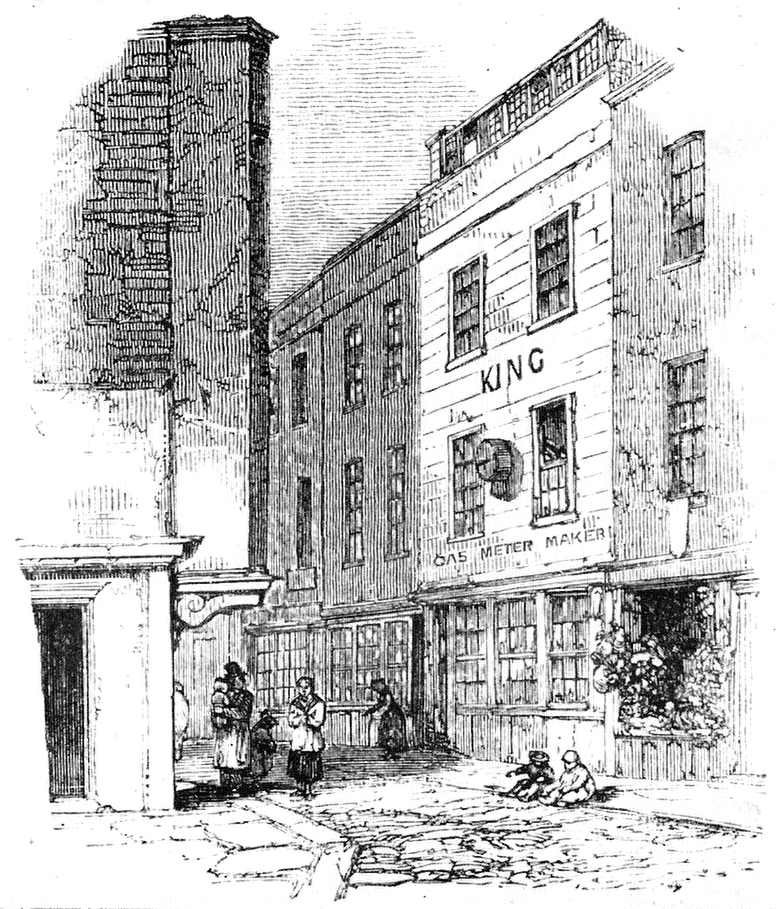
An accusation from a household
In January 1762, Londoners discussed strange knocking around the bed of young Elizabeth Parsons. Her father Richard and his supporters connected the sounds with Fanny Lynes, a former resident who had lived with William Kent. A proposed communication system used numbers of knocks as answers. The particularly serious claim was that the dead woman accused Kent of poisoning her. This must be retold as an accusation arising around a supposed ghost. A message obtained through sounds that have already been assigned meanings does not establish the cause of a person’s death.
Why the affair escaped the lane
Dr Johnson’s House describes séances, newspaper attention and crowds of visitors. The story also involved an ordinary financial dispute: Kent had lent Parsons money and sought its repayment. That does not mean every participant acted with the same intentions. It matters when assessing independence, however. One household and newspapers repeating its claims do not become dozens of separate eyewitnesses. As public pressure increases, it becomes especially useful to ask who personally heard a sound and who repeated an explanation that was already becoming familiar through circulation.
Testing the ghost’s promise
Samuel Johnson took part in the investigation. The museum’s account refers to the report of a test during the night of 1 February, when the promised manifestations were not reliably demonstrated, including a supposed promise to knock on Fanny’s coffin. The investigators concluded that the sounds were being produced artificially. People involved were later found guilty of conspiracy. A court’s outcome and a reconstruction of every individual knock are nevertheless different levels of certainty. Rejecting an unconvincing demonstration of a spirit does not require inventing a precise explanation for every noise reported during the controversy.
Newspapers, a pamphlet and public memory
Wellcome Collection preserves contemporary material: eight issues of the London Chronicle from January and February 1762, together with engravings. These show the story circulating in print, rather than leaving us dependent on later retellings. Oxford’s Great Writers Inspire describes The Mystery Revealed, a pamphlet concerned with the same affair. Different genres should be compared carefully. A newspaper account, a polemical pamphlet and a museum overview were made for different purposes. The survival of an old illustration establishes an illustration and public interest. It does not transform that image into a photograph of an apparition.
What still makes the case worth reading
Cock Lane shows how an uncertain sound can turn into a confident public accusation. Useful investigation interrupts that chain: first the observation, then the proposed method of signalling, then the meaning assigned to the signal. Every transition needs additional support. In a modern knocking claim, an uninterrupted recording, controlled access and test conditions specified in advance would matter. Repetition alone does not make an account independent or reliable. Our marker locates the London lane associated with the historical controversy, rather than a proven communication with the dead. It also does not implicate present residents in an eighteenth-century affair. The distinction allows an engaging historical story to remain engaging without promoting its central accusation as fact.


