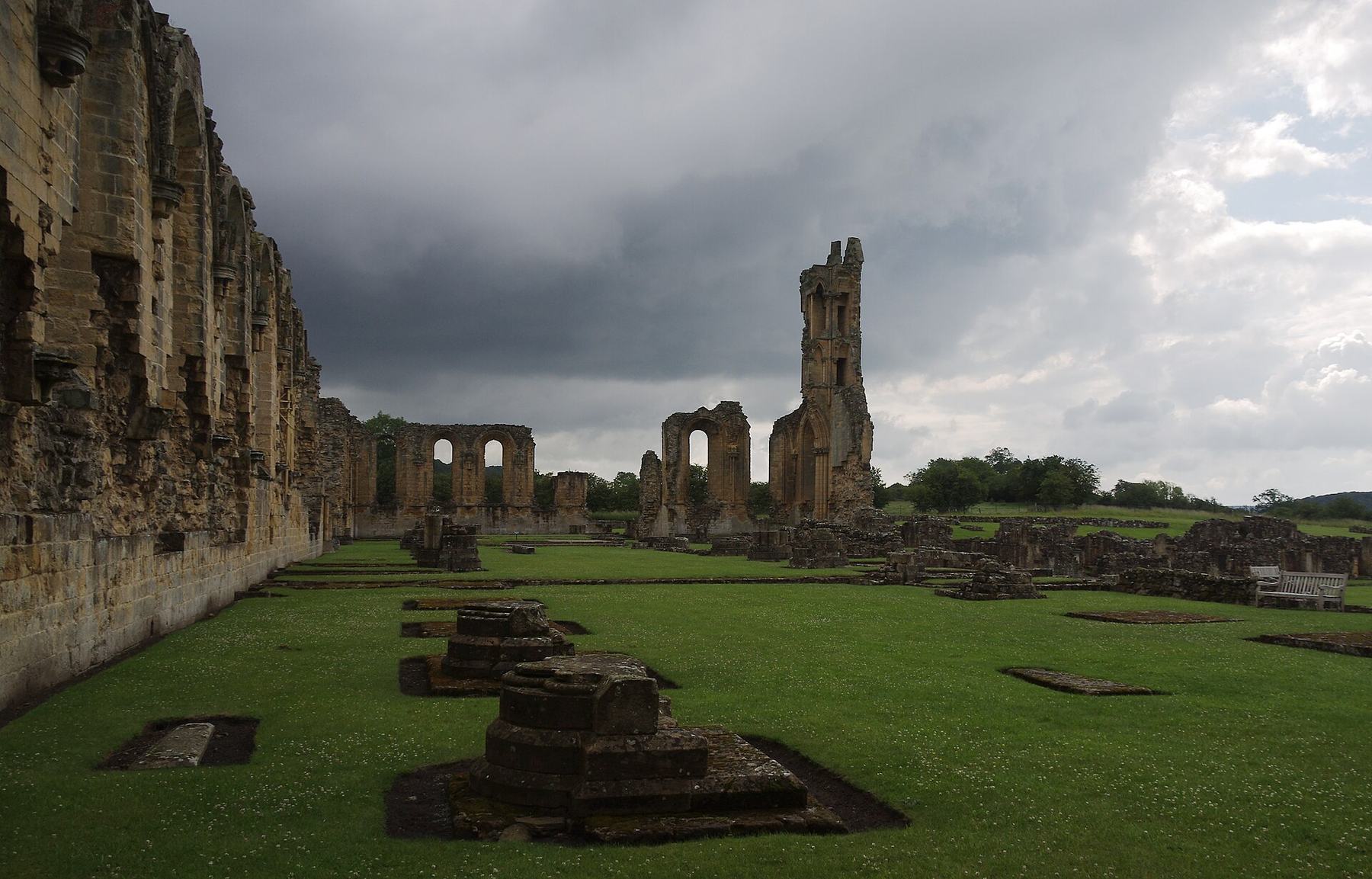
An unexpected companion on a Yorkshire road
The second of twelve stories recorded in a manuscript associated with Byland Abbey begins with a tailor returning home. The scribe left a blank where Snowball’s first name would have appeared. During the reign of Richard II he was riding at night from Gilling East towards Ampleforth when he heard something resembling ducks splashing in water. A raven then circled his face, descended and violently beat its wings against the ground. Snowball dismounted, intending to catch it, but saw sparks falling from its sides. He crossed himself. The bird withdrew, returned, struck the rider in the side and knocked him from his horse.
A conversation after the struggle
Recovering, the tailor defended himself with his sword. The encounter changed again: he now confronted a dog wearing chains. Snowball adjured the being in the Trinity’s name, demanding its identity, the cause of its suffering and a remedy. The spirit answered that it had been excommunicated and directed him to a particular priest for absolution. Masses were also required. The account adds a threatening condition: the tailor must fulfil the errand or his own flesh would sicken and decay. During their conversation the being appears fiery and seems to form words within its body. This is an elaborate medieval representation of terror, considerably removed from the later convention of an immaterial, stationary shadow.
Five shillings and a hidden document
After several days of illness, Snowball travelled to York. The priest initially refused his request and consulted other clerics. Eventually the tailor paid five shillings and received absolution written on a small piece of paper. He was to place it secretly in the grave beside the dead man’s head, without revealing his name. Another cleric, Richard of Pickering, confirmed that the document was sufficient. Snowball also approached York’s monastic communities to arrange the required Masses. Money, documents, consultation and travel occupy almost as much attention as the fantastic assault. Assistance to a dead person is presented as practical work performed through relationships and institutions among the living.
The second meeting and somebody else’s clothing
A neighbour refused to accompany him to the appointed meeting. Snowball prepared a circle with a cross, Gospel texts and reliquaries. The returning spirit first appeared as a goat, then assumed a tall human form and reported that absolution had helped. It discussed other dangerous spirits nearby and its approaching release. The conversation also turned to its helper’s conduct: the tailor was wrongfully retaining clothing belonging to a companion from warfare overseas and should return it to the owner, who lived near Alnwick. The spirit additionally condemned gossip. People guessing its identity were slandering other dead people. Snowball’s renewed illness closes the account, preventing the assistance from becoming a straightforward tale of happy reward.
Comparing the manuscript and its interpretations
The historical English translation and an educational edition allow the transformations, payment and errand to be compared. English Heritage explains the importance of Catholic remedies in such narratives; modern scholarship considers social obligations and inheritance. These are readings of a recorded story, rather than separate confirmations of a supernatural raven or dog. The action is placed in Richard II’s reign without an exact year. Dating the manuscript additions to around the early fifteenth century concerns the recording of the tradition. Those times should not be conflated, and no specific roadside point can responsibly be presented as the location of an established manifestation.


