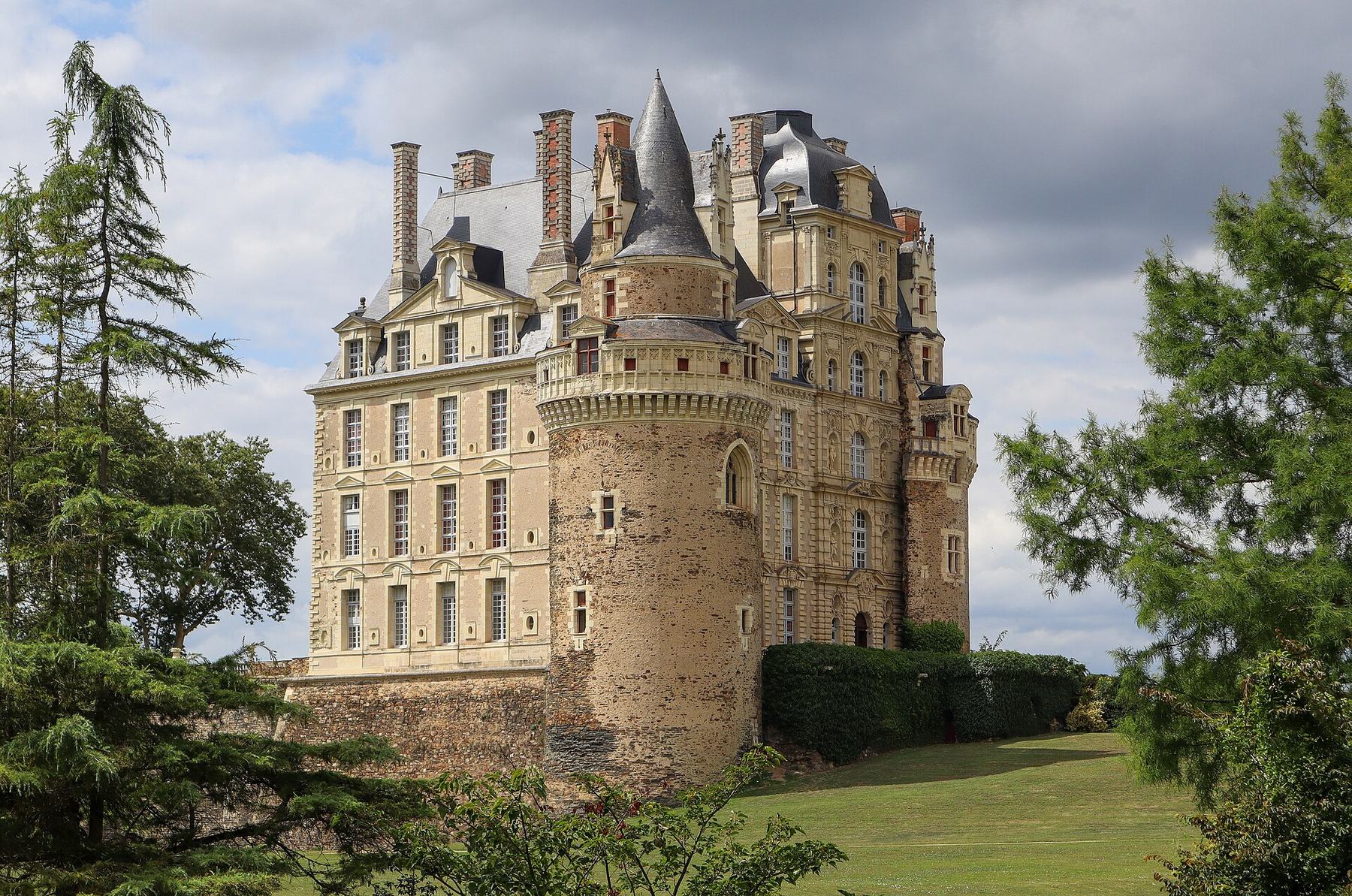
The dress that names the ghost
Brissac’s Green Lady is first a recognisable narrative figure: a woman, a green dress, a night-time chateau and a lamenting voice. A regional Angers Maville article identifies her with Charlotte de Valois and places appearances in the Louis XIII bedroom and a tower during storms. Other tourism retellings make the face frighteningly empty and add footsteps or early-morning moans. These details belong to different versions, rather than one inspection report. The effect comes from movement between a familiar person and a damaged appearance: the dress identifies a woman whom the face prevents us from recognising as a living guest.
A real woman behind the name
Charlotte was a daughter of Charles VII and Agnes Sorel and the wife of Jacques de Breze. Historian Paul Durrieu’s study of Sorel’s daughters records her killing by her husband in 1477. His subject is family relationships, manuscripts and dynastic memory, rather than posthumous appearances. This provides an important accompanying history: Charlotte’s existence does not depend on the success of a visitor attraction’s ghost story. Her violent death can become the foundation for a return narrative, but the movement from documented murder to a specific apparition is a further step that the documents do not automatically establish.
A building with several lives
The chateau’s official history traces Rene de Cosse’s purchase of the property, subsequent generations, rebuilding and the later life of the family home. The tall central structure joins older towers. Visitors therefore encounter a building assembled over time, rather than an unchanged setting from one tragic night. Family ownership and historic architecture can be checked separately from reported corridor sounds. Even the name of the Louis XIII bedroom reveals the distinction: a space named after a later occupant can become the setting of a story about a woman who lived considerably earlier.
The owner answers with humour
The regional article also includes an answer from owner Charles-Andre de Cosse-Brissac. He responds to the suggestion of female cries with a joke about his wife’s reaction to his cooking. This is the direct voice of a present custodian, but it does not offer an encounter with the apparition. The remark shows the legend existing alongside ordinary family life. A visitor may anticipate a moan behind a door while a resident treats the familiar narrative humorously. The visitor’s expectation cannot be transformed into testimony supplied by the owner.
Comparing family history and haunting
The official website provides ownership and architectural history; Durrieu places Charlotte in her historical family; regional and tourism publications record the Green Lady’s reputation. These are not four independent appearances. Neither an original narrator nor a first encounter date is established by this material. The murder date must likewise not become a sighting date. The legend preserves the memory of a woman’s death and gives that memory a voice, but verifiable information runs out before the claim that the dead woman physically returned is established. The map point identifies the known chateau, while the haunting remains undated.


