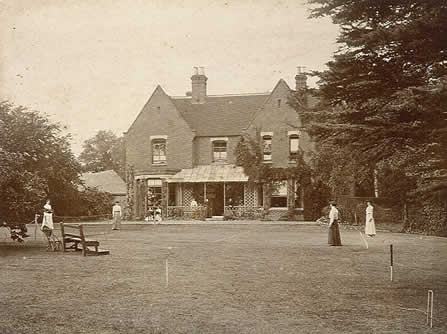
The house opposite the church
Borley Rectory was built in 1863 for the Reverend Henry Bull. A substantial brick house with several staircases, it stood opposite the church near the Essex–Suffolk border. Family stories gradually populated it with footsteps, strange sounds, a phantom coach and a nun. A dramatic explanation involved her elopement with a monk, punishment and secret burial. A monastery on the rectory site has never been established historically. The distinction matters: a particular Victorian building is securely documented, while the medieval setting for its most famous legend remains unsubstantiated.
A newspaper brings an investigator
Residents’ reports reached the press in 1929, bringing Harry Price to Borley. He already had experience examining mediums and theatrical tricks. The house acquired a new social life as visitors listened for knocks, watched objects and debated who might be present in individual rooms. Under subsequent occupants Lionel and Marianne Foyster, the reported incidents became especially numerous. Appeals to Marianne and requests for help allegedly appeared on walls. Their human form gave the story an intimate quality: the supposed agency seemed to select an individual recipient rather than simply making noises.
Observers and the name Marie Lairre
In 1937 Price rented the rectory for research and recruited volunteer observers. Visit logs and statements survived, although control conditions and their quality were later disputed. Spiritualist communications introduced Marie Lairre, supposedly a former French nun murdered by her husband. This version does not automatically coincide with the earlier story of eloping lovers. Such narratives give noises an identity and purpose, but acquiring a name through a planchette does not independently establish a historical person. Price continued searching for corroboration after the house disappeared, treating Borley as a central achievement of his career.
Fire, bones and a flying brick
The rectory was severely damaged by fire on 27 February 1939 and demolished in 1944. Price organised excavations and connected a recovered fragment of human jaw with the legend. Critics considered the remains’ origin and dating inadequately established. During a visit to the demolition site, a Life photographer captured a brick in mid-air, which Price interpreted as anomalous. An active demolition site also permits ordinary falling or throwing, however; one instant of motion cannot establish levitation. In these episodes real objects supported explanations much more specific than their discovery circumstances justified.
Comparing the investigations
In 1956 Eric Dingwall, Kathleen Goldney and Trevor Hall published a critical examination highlighting suggestion, rumour, exaggeration and possible deception. Price’s defenders contested some accusations, while later interviews with Marianne changed the picture of relationships within the household. The University of London archive confirms the survival of correspondence, agreements and Price’s research materials, but preserving a collection does not endorse its paranormal conclusions. Comparison leaves Borley a richly documented history of competing interpretations. It does not allow several decades to be reduced honestly to either one established ghostly nun or one definitively identified fraudster.


