A story that ends with an invitation
Bloody Mary is generally not encountered accidentally on a road. Someone first tells a story about her and then proposes testing it. In children’s and adolescents’ folklore, a bathroom or school toilet becomes the place of invocation: darkness, a mirror, a repeated name and the expectation of another face. Research does not establish one compulsory number of repetitions. Even the name moves between Mary Worth, Mary Whales and Bloody Mary. What matters is the passage from words to action: someone looks where their own reflection should be and waits for somebody else. Friends may remain outside, sharing the fear of the person who entered.
One doorway, several inhabitants
Playing the Archive publishes contemporary children’s accounts in which several spirits occupy school and domestic spaces. A Green Lady belongs in an attic, Mary in a bathroom, and a separate Blue Baby narrative appears alongside them. Characters can move between conversations, borrowing repeated names and threatened appearances. Fieldwork reveals a group’s active storytelling rather than a tidy catalogue of supernatural species. One addition intensifies the danger; another anchors it to a familiar doorway. Two similar sets of instructions consequently need not represent independent descriptions of the same being.
Running away becomes another story
The authors of Haunting Experiences describe the invocation ending in terrified flight, prompted either by a reflected apparition or by the thought of one. The participant returns to the waiting group, which gains a fresh story to circulate. An ambiguous result still sustains tension: someone claims to have seen a face while someone else left too soon. Petr Janecek examines the practice’s spread through Czech children’s folklore and its relationship with local forms of children’s spiritualism. This is a tradition moving between languages and generations, rather than evidence for one woman’s biography concealed behind every mirror.
What experimental participants saw
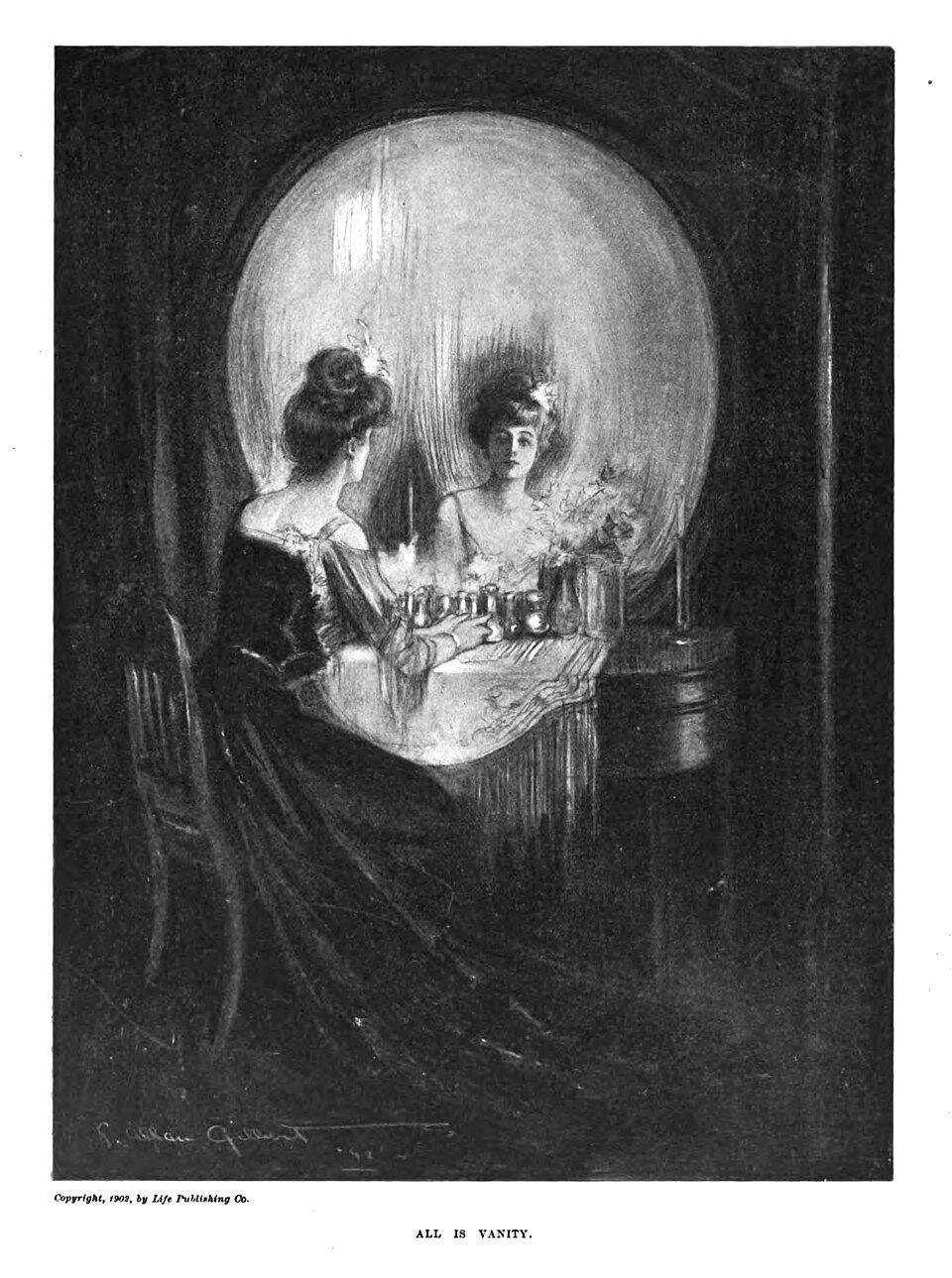
Psychologist Giovanni Caputo investigated a different, controlled situation: adults looked at their own faces in a dimly illuminated mirror. Participants reported altered features, unfamiliar faces, animals and fantastic beings. Knowledge of the Mary narrative was not required for an unusual image to appear in that experiment. The study therefore offers a useful comparison: under particular conditions an ordinary reflection can look unfamiliar. It does not reproduce every school account, examine every possible setting or justify declaring every report identically illusory without investigation.
Comparing perception and tradition
Field records establish that the ritual exists and that its rules change; the psychological paper documents a particular perceptual effect in specified circumstances. These forms of evidence answer different questions. Mary remains a character whom a group attempts to meet, rather than an identified dead woman whose return has been demonstrated. The whole tradition has no single event date or address. Its continuity is especially visible in the recurring exchange: a frightening story leads to an action, and the action returns to the group as another frightening story. This social sequence can be documented even when the apparent face itself cannot be independently recovered.


