The queen comes home
In Norfolk tradition Anne Boleyn returns to Blickling on the anniversary of her execution. The National Trust associates the return with 19 May, without identifying a first witness or an original year of appearance. A fuller version quoted by Norfolk Record Office depicts a woman in white carrying her own severed head. She arrives in a coach whose driver and four horses are also headless. The execution thus becomes an entire nocturnal procession. The estate provides a destination connected with family and origins, although the historical Anne died far away in the Tower of London.
Why Blickling?
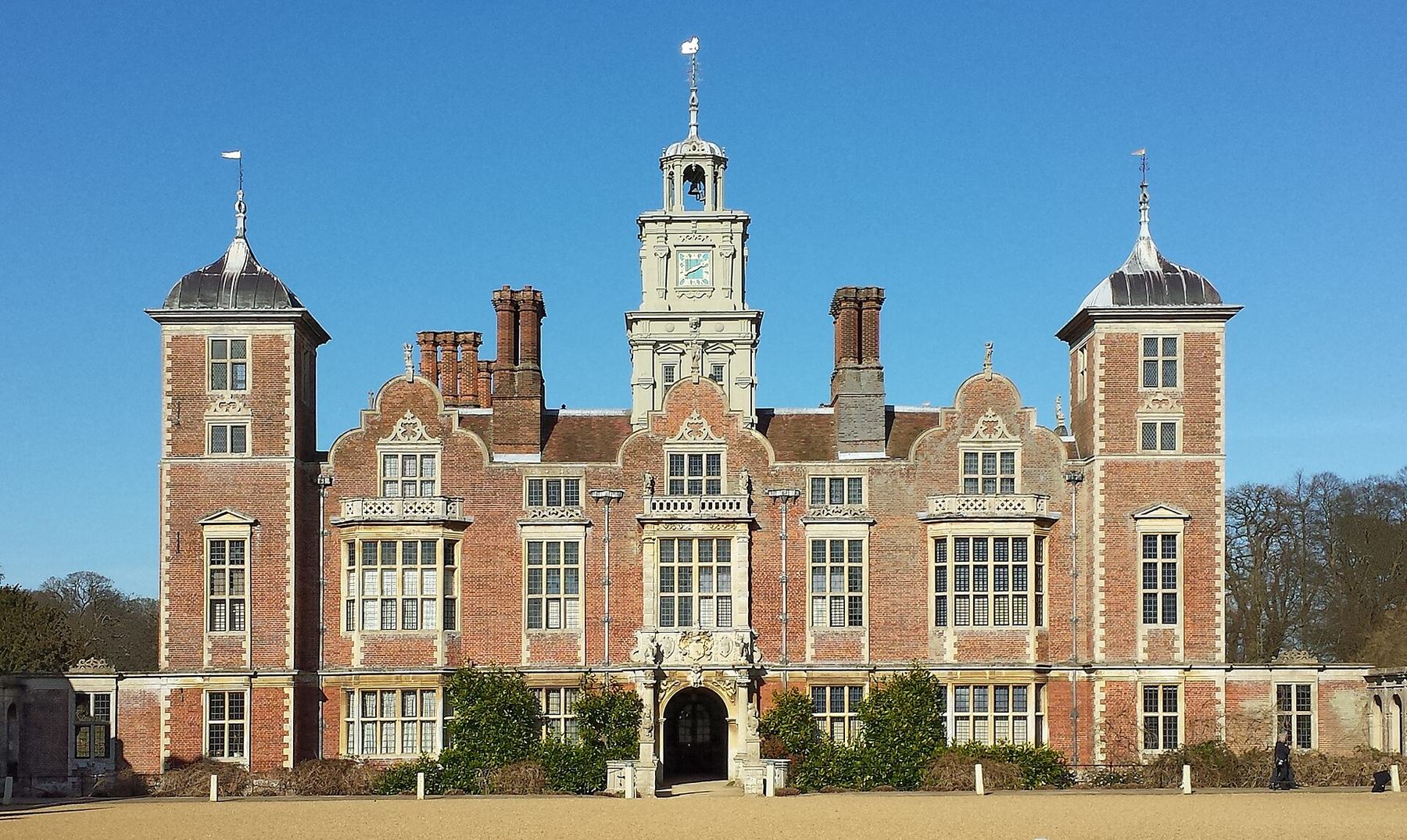
The Boleyn connection is real. The National Trust’s historical account states that Geoffrey Boleyn acquired the estate in 1452, after which it passed through his descendants. Anne’s birth here is described as likely, rather than established in every detail. That distinction matters because an attractive legend can easily turn a possible birthplace into an unquestionable ancestral cradle. The imposing house visitors recognise belongs to a later period. Norfolk Record Office explicitly explains that the present hall was built on the site of Thomas Boleyn’s property. Its familiar façade cannot therefore be treated as the building in which Anne spent her childhood.
A night of waiting
The story provides a recurring appointment: arrive on the designated night and wait for the carriage. This arrangement allows the tradition to survive without requiring a new, complete eyewitness narrative each year. An ITV report in May 2014 recorded people gathering at the estate in the hope of seeing the headless queen. It documents their expectation and participation, rather than an established apparition. A historical execution date becomes the calendar for a local custom. It cannot be transferred into an observation-date field: 19 May 1536 was the date of Anne’s death, not a documented ghostly arrival in Norfolk.
The queen on a real stage
This memory also had a tangible public life. Norfolk Record Office preserves posters, photographs and participants’ recollections of the Masque of Anne Boleyn, staged at Blickling in 1909, 1925 and 1938. Written by Nugent Monck, the production raised money for restoration of the local church. Queen Mary attended in 1938. In an interview, participant Jean Craske recalled how people living and working throughout the estate became involved in the preparations. Actual costumes, processions and audiences demonstrate the depth of Anne’s place in local imagination. These performances cannot simply be identified as the origin of nocturnal sightings, but they illuminate the estate’s rich commemorative setting.
Comparing legend and records
The National Trust’s short account establishes the continued annual motif; the archival article supplies the white dress and headless team; ITV records a modern gathering. These describe different aspects of a tradition rather than three independent encounters with one ghost. Family history and surviving theatrical posters can be checked separately. The original appearance, the identity of the first storyteller and the physical existence of a supernatural carriage remain unestablished. The dramatic nocturnal story is consequently preserved as an undated legend.


