A town forbidden to cast a shadow
Rajasthan’s official tourism account preserves two popular explanations for Bhangarh’s destruction. In the first, the ascetic Baba Balau Nath lives there before the palace is constructed. He accepts the development on condition that new buildings never cast their shadow over his dwelling. Architecture becomes a moral agreement: a ruler may enlarge his residence but must respect another person’s protected space. A later descendant raises the buildings, the shadow crosses the boundary and the town is doomed. This is the sequence supplied by a legend. The source does not produce a verifiable record of an actual negotiation between the ascetic and the builders.
Perfume, desire and a boulder
The second version centres on Princess Ratnavati. A magician seeks her love and replaces perfume she is buying with an enchanted preparation. Recognising the trick, she throws the preparation onto a stone. Instead of a compliant princess, an enormous boulder moves towards the magician. Before dying he curses the town and its inhabitants. Subsequent devastation completes the curse in the tourism narrative. These plots are not historically corroborating accounts: one makes a broken promise decisive, the other an attempt at coercion that turns against its author. Both explain the visible emptiness of ruins through a personal drama.
What remains on the hillside
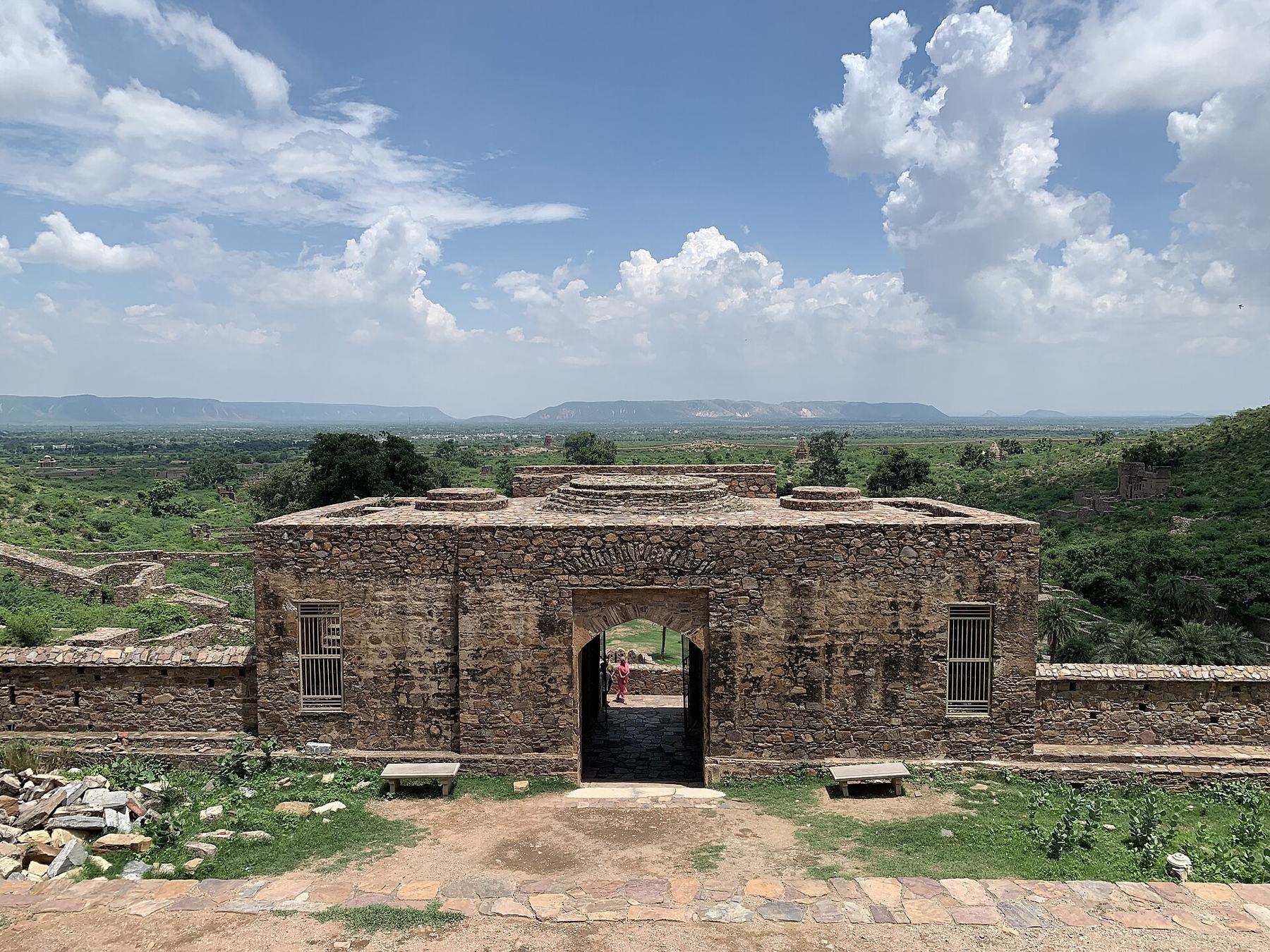
The archaeological description hosted by the Indira Gandhi National Centre for the Arts presents a more complex site. Fortifications, market streets, houses, temples, palace remains and a cenotaph survive. It connects the settlement’s foundation with Bhagwant Das and its later history with Madho Singh, and mentions an inscription beside Som Sagar reservoir. Material reference points therefore exist separately from the enchanted perfume story. An empty market street may provide a persuasive setting for a curse precisely because it was a real street. Existing masonry and an inscription do not establish conversations with a magician, while a missing roof cannot identify the cause of destruction.
Why the gates close
The tempting modern detail is the ban on remaining after sunset. The tourism department does describe restricted access between sunset and sunrise. Published monument rules, however, prescribe daylight opening for a wider class of protected properties. An administrative rule and a supernatural reputation can coexist. A closure notice does not show that archaeologists measured ghosts or officially established a curse. Closed gates nevertheless strengthen the story’s imagined nocturnal world: the listener pictures a place from which ordinary visitors have already been excluded.
Comparing the town’s different histories
The tourism source documents published variants, the archaeological inventory identifies the monument and its history, and the rules supply the general administrative framework. None is a night observation log with named witnesses and independent checks. The curse is consequently left undated. The approximate map point identifies known ruins rather than an established supernatural event. The strongest evidence concerns how people explain an abandoned town and turn its evening closure into a continuation of the legend.


