Knocking becomes speech
The Bell story begins with domestic disturbances: knocking at the door, blows against walls and noises whose source nobody could find. In Martin Van Buren Ingram’s 1894 account, children had their bedclothes pulled away and their hair tugged at night. Farmer John Bell’s daughter Elizabeth, usually called Betsy, suffered particularly badly. Sending her to neighbours supposedly brought no relief because the disturbances followed her. The invisible participant then began answering questions, first with knocks, afterwards in whispers and eventually with a distinct voice possessing a female personality.
A speaker who followed no rules
The voice mocked household members and visitors, disclosed supposed secrets and changed explanations of its own identity. One thread connected it with bones found nearby and a promise of hidden treasure. People were directed towards a stone beside a spring, but the search did not deliver the expected wealth. This episode makes the being more than an alarming noise: it draws living people into conversation, promises and futile labour. Later tradition called it Kate and connected it with the neighbour Kate Batts. Identifying a real person with the witch remains part of the legend rather than an established accusation.
Betsy and her dying father
Another strand concerns Betsy’s future and her engagement. The invisible speaker allegedly interfered with her decision about marriage while her father’s suffering increased. The climax concerns John Bell’s death on 20 December 1820. Ingram introduces a mysterious liquid with which the spirit boasts of having poisoned the farmer. Retellings include an animal being given the substance. A documented death and a narrative explanation of that death nevertheless carry different evidential weight. The sources provide no surviving sample, medical confirmation of poisoning or contemporary incident report supporting the supernatural confession.
How the detailed book appeared
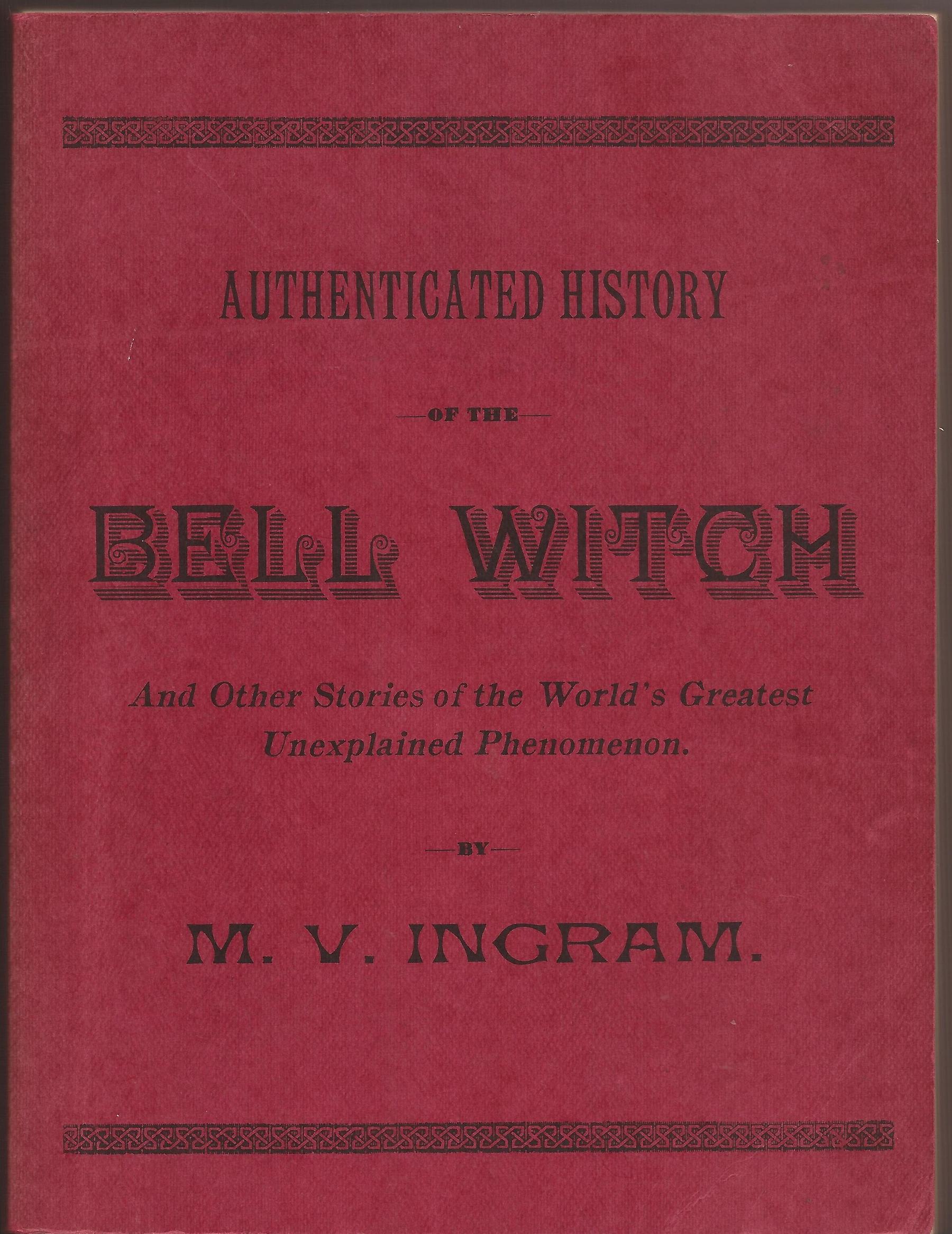
Ingram presented the central chapter, Our Family Trouble, as recollections written by Richard Williams Bell in 1846. Richard had been a child during the alleged events. The original manuscript cited by the publisher has never surfaced. North Carolina’s Department of Natural and Cultural Resources stresses this documentary gap: the earliest known printed mention appeared in an 1886 history of Tennessee, while the full account followed in 1894. Accordingly, dialogue, the sequence of nights and characters’ private thoughts cannot be treated as an 1817 transcript simply because the book describes itself as authenticated.
Comparing versions and facts
The digitized Ingram volume allows the later narrative’s contents to be checked, while the government historical note explains the lack of early sources. Joe Nickell separately examines human trickery and suspicions surrounding Betsy. His explanation is also a reconstruction: missing documentation cannot establish the girl’s guilt. The most secure conclusion concerns the development of the tradition. The family, setting and farmer’s death belong to historical context; the invisible speaker and its murderous confession survive mainly through a much later narrative chain.


