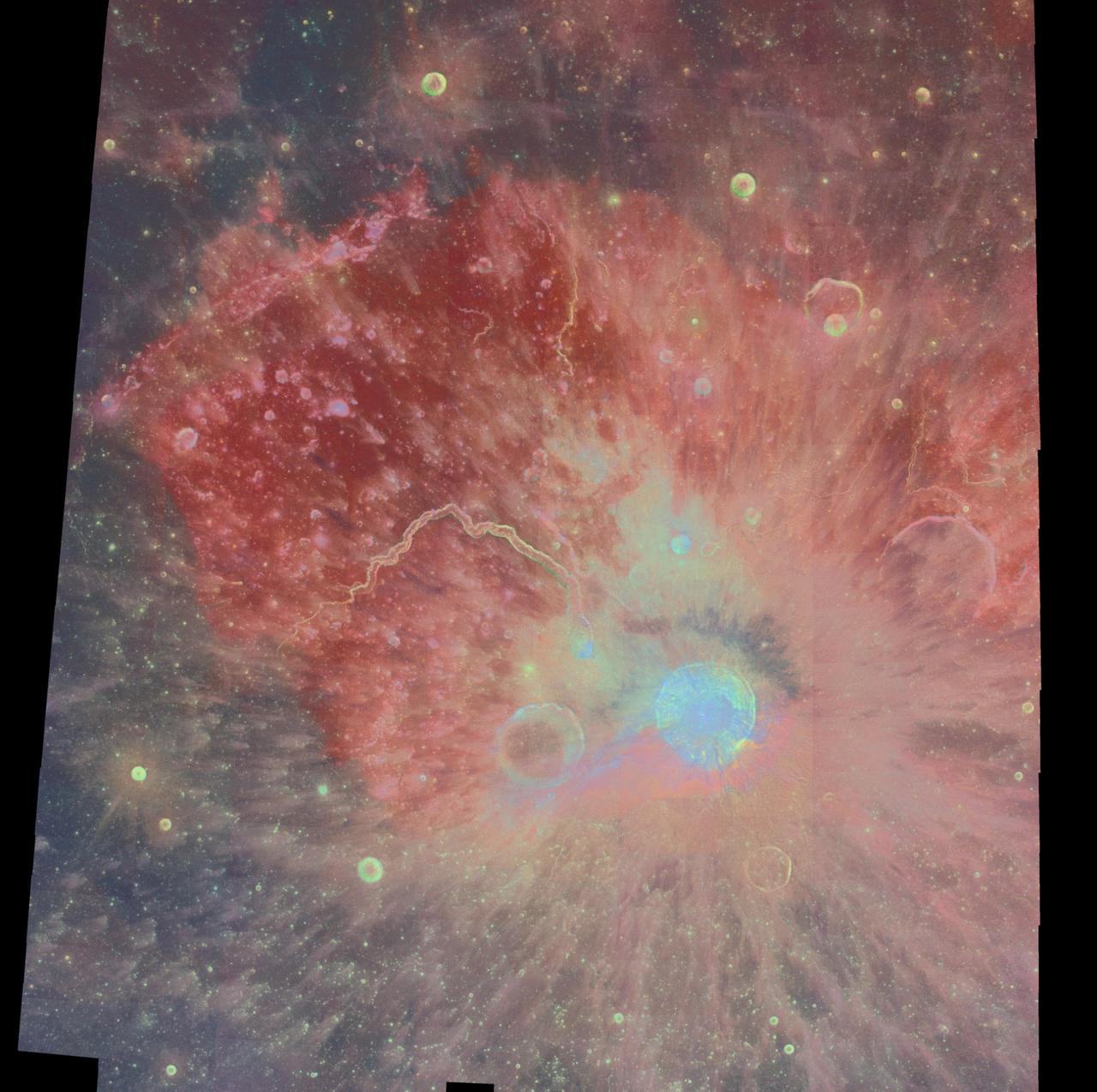
An observation during lunar mapping
James Greenacre and Edward Barr were using Lowell Observatory’s 24-inch refractor to refine a lunar chart. They reported reddish and orange areas near Aristarchus crater and Vallis Schröteri. A NASA comparative review discusses this among cases that revived interest in transient lunar phenomena. Treating their account as an established recording of a physical surface process would be premature: several testable links separate perception of colour from an explanation for it.
Why two dates appear
Historical summaries commonly date the episode to 29 October 1963, the local observing date in Arizona. O’Connell and Cook’s detailed reconstruction uses 30 October in Universal Time. We therefore give the night of 29–30 October and place the case in the 1963 year filter. These are different time conventions for one account, rather than two additional independent events.
The historical account includes several coloured areas and changes in their appearance. They should not be compressed into a single instantaneous “flash”: duration, changing colour and position on illuminated terrain matter when choosing tests. A later illustration of the observation should likewise not be mistaken for a photograph of what was visible in the eyepiece.
The strengths and limits of the account
The observers were familiar with lunar terrain and were engaged in professional cartographic work. That makes their descriptions more informative than a casual glance at a bright disc. Nevertheless, two people using a shared optical system share some possible instrumental and atmospheric influences. Their agreement strengthens the account of what they saw, without automatically eliminating every alternative cause.
Cameron’s catalogue helps compare reports and locate references. Inclusion is not certification of a physical mechanism. In counting evidence, readers should distinguish the initial account, a later scientific review and a popular retelling of that review.
Test explanations against specific features
The authors of the 2013 reanalysis challenge a simple atmospheric or optical explanation. That is an important position in the debate. Testing any proposal requires connecting its mechanism to the particular regions, sequence and observing conditions, rather than merely naming a general effect.
A practical test could examine the same terrain at comparable solar illumination and lunar altitude while recording it through different telescopes and cameras simultaneously. Original data, filter details and control regions would be required. That approach can search for differences between a lunar change and a change introduced as its image passes through Earth’s atmosphere and the instrument.
What the globe marker represents
We use the IAU/USGS centre of Aristarchus, approximately 23.73° north and 47.49° west. This is a reference for the broader reported area, not a measured position of an individual red patch. The modern surface texture is a cartographic background; it does not verify the historical glow.
The listed material does not reliably identify an artificial object. The case remains interesting because of its observational detail and the opportunity to compare testing methods. An unresolved colour effect is a specific research question. Adding a story about extraterrestrial arrivals would require new, independent evidence.


