The claim determines the evidence required
UAP groups together reports that have not yet been reliably classified; it does not establish one physical origin. Before assessing a record, the claim being tested must therefore be defined. “The military really recorded this file,” “the target moved at a particular speed” and “this is extraterrestrial technology” require different chains of evidence. Confirming the first does not automatically establish the third. A useful archive shows which question has been answered, which uncertainty remains and what information could change the assessment. Otherwise an administrative label can quietly become a physical conclusion.
A file's provenance versus an object's origin
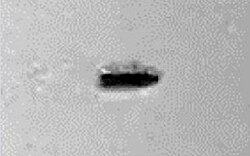
The Pentagon's April 2020 publication of three Navy videos is a useful example of establishing provenance. The department acknowledged the recordings and authorized their release. That strongly supports their institutional source, but does not establish the target's composition or means of propulsion. An original file, its transfer history and an account of alterations help establish what is being examined. A social-media screenshot loses some of this context. Yet even perfectly preserved imagery cannot supply information that was never recorded, such as the distance between a camera and its target.
When an impression becomes a measurement
NASA emphasizes calibration and metadata. Estimating speed requires distance, elapsed time and observer motion; estimating size requires scale and geometry. A patch crossing a screen supplies angular change, but without range it does not establish linear speed. A calculation should preserve uncertainty as well as its central result. If a modest change in an unknown distance radically changes the answer, a range is more informative than an exact-looking number. This reveals which properties are actually constrained by the data and which depend on assumptions introduced by the analyst.
Independence matters more than repetition
Ten publications of one video are not ten observations. A second recording from another location is more useful when timing and directions agree and the records can be connected to one target. Likewise, two instruments on one platform can depend on shared tracking information or initial settings. Independence must be investigated rather than counted from the number of displays. Witness testimony can identify a useful interval and circumstances. Separately recorded initial accounts are more informative about what each person independently saw than narratives harmonized through later discussion.
An explanation must be capable of failing
A working hypothesis is useful when it is clear which observations would contradict it. A balloon interpretation can be tested against wind and geometry; an optical-artifact interpretation against camera behavior. One explanation failing does not automatically prove another. AARO's historical review introduces another kind of test: whether an alleged program existed and where accounts about it originated. That differs from measuring a trajectory. Results can inform each other, but an administrative record cannot be expected to supply answers that require a well-instrumented observation. Each form of evidence should be evaluated against the question it can actually address.
Editorial assessment: mapping confidence
Our approach separates testimony, measurement, institutional assessment and editorial interpretation. This allows respect for a participant alongside scrutiny of the participant's explanation. NASA has not presented confirmation that UAP are extraterrestrial; missing data neither remove that limit nor establish the opposite. Sometimes a useful investigation achieves a modest result: an extraordinary-speed claim is removed although the object remains unnamed. That is progress when the analysis is reproducible. An archive's reliability depends on drawing these boundaries accurately, rather than maximizing the share of stories given a final and confident label.