Rarity and uncertainty describe different things
The Chelyabinsk fireball, global waves following Hunga Tonga and the auroras of May 2024 looked exceptional and were physically significant events. Yet rarity alone does not establish origin. An unusual observation becomes explained when a mechanism reconciles independent evidence better than alternatives. That need not supply a precise value for every parameter. Atmospheric asteroid disruption can be securely established while the object’s size is still refined. An archive therefore needs successful investigations as well as unresolved stories, showing how an impression becomes a testable connection.
One source leaves different traces
The Chelyabinsk event of 15 February 2013 produced light, a shock wave and a dust plume. Cameras, damaged buildings and satellite measurements describe different consequences of one process. NASA tracked the upper part of the dust cloud as it circled the Northern Hemisphere in four days. That does not mean the original rock spent four days flying around Earth: after disruption, researchers were studying particles transported by the atmosphere. Explanation connects these stages causally while preserving the distinction between incoming body and subsequent cloud. Similar-looking shapes in two images cannot replace that connection.
Chronology protects against false causation
The asteroid 2012 DA14 passed close to Earth on the day of the Chelyabinsk explosion. JPL compared the trajectories and established that they were unrelated events. Their shared date encouraged a connection, but geometry contradicted it. The principle applies more broadly: publishing a recording later does not make its observation recent, and multiple reposts do not create independent instruments. A causal account needs compatible timing, propagation and a source. An explanation is especially valuable when it can reject an attractive association rather than merely find visual resemblance.
Tonga: a global signal is not one uniform effect
The eruption of 15 January 2022 was recorded by satellites, barometers and seismoacoustic networks. Research presented by USGS describes atmospheric-wave propagation; NOAA shows pressure continuing to change as waves travelled around the planet. Here, “felt worldwide” means a signal could be measured, rather than equal destruction at every coast or city. Atmospheric disturbances and ocean waves are also connected but distinct processes. A useful explanation preserves those differences; otherwise a global scientific observation becomes an inaccurate picture of a uniformly worldwide disaster.
Storm intensity and service failure need different checks
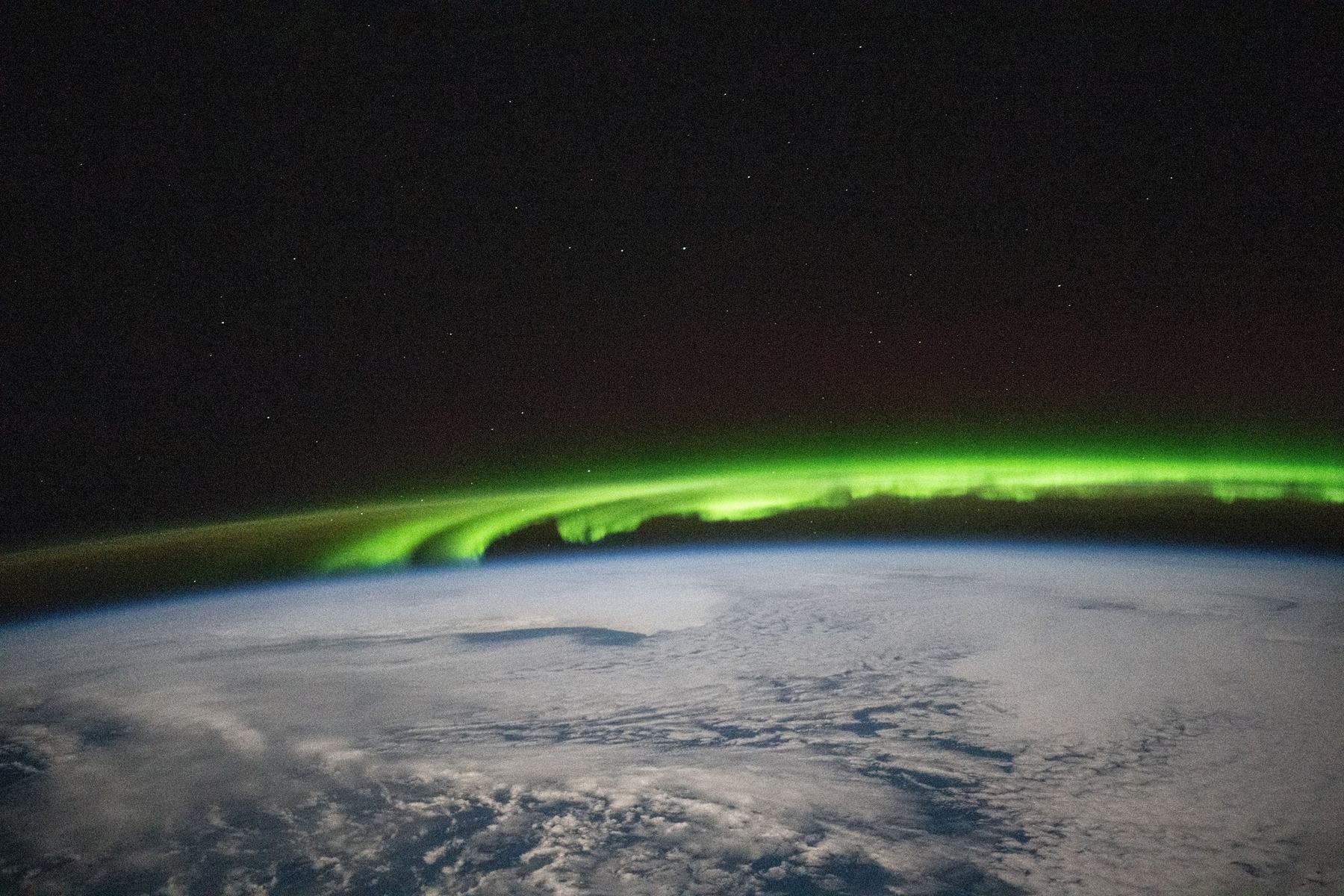
In May 2024, NOAA warned of multiple coronal mass ejections and possible effects on technology. Auroras revealed the disturbance’s visible expression. NIST documented a particular measured effect: its F3 and F4 cesium clocks sensed the magnetic-field change, scientists applied a correction, and civilian timekeeping continued without interruption. A strong natural cause, a sensitive instrument and a service failure are therefore not synonymous. A warning of a possible malfunction cannot be quoted as an account of an actual outage. The latter requires evidence about a particular system and its operation.
Our editorial standard for an explanation
We consider an explanation strong when it connects a source, a mechanism and a measurable consequence while defining its precision. Chelyabinsk demonstrates agreement among different traces; Tonga shows one event propagating through different media; the May storm distinguishes disturbance intensity from the operation of a protected system. These examples do not automatically solve every similar-looking clip without a date or location. They do change the starting point: a dramatic observation can motivate investigation without proving an extraordinary origin. Preserving wonder and requiring testable evidence are compatible editorial aims.