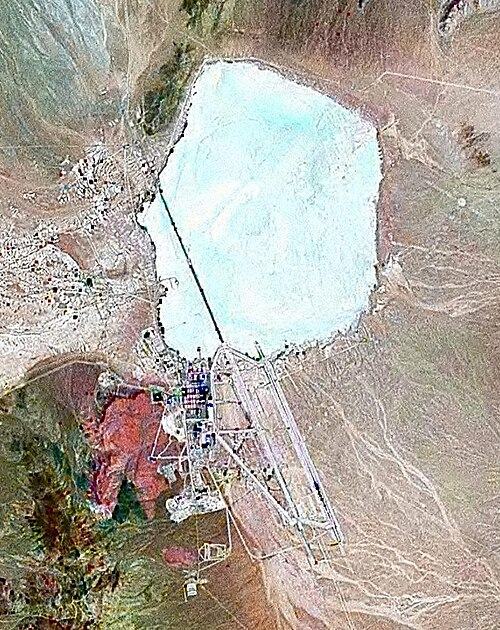
The base as an archival problem
Area 51 is better investigated through the history of its programs than through a single legend about a forbidden place. One facility can serve changing customers, aircraft and missions over time. A document explaining U-2 testing need not describe every later activity. Conversely, evidence about a later aircraft should not be projected backward into 1955. This approach preserves interest in actual secret history without turning each gap into confirmation of a preferred explanation. The central question is which claim a particular record supports, and where its applicability ends.
Three layers of Groom Lake sources
The CIA's short historical account provides an accessible narrative about testing and participants. Its declassified U-2 and OXCART history describes the program in much greater detail. Contemporary internal correspondence shows what problems officials discussed while the work was underway. These are not necessarily three independent witnesses to each episode: a later account may rely on the same correspondence. They are better compared by function. A narrative supplies context, a history organizes chronology, and a contemporary record helps verify a particular detail or the language used when a decision was first considered.
What the inspector's 1961 letter reveals
Lyman Kirkpatrick's letter to Richard Bissell dated 13 October 1961 discusses vulnerability to unauthorized observation, management and testing work. Its concerns about unclear authority and disagreements between organizations are particularly informative. This is internal correspondence about practical difficulties, rather than a promotional portrait of an all-powerful institution. The record supports the existence of a protected, complex program with organizational problems. It does not establish the contents of any imagined hangar: the concerns have a specific operational context and do not report extraterrestrial material.
Why even the site's appearance could be sensitive
John McMahon's memorandum of 6 April 1962 considers photographing the area with U.S. reconnaissance assets to estimate what an adversary could learn. Its concern is the disclosure of observable activity. This is a more specific explanation of secrecy than an assumption that restrictions protect only incomprehensible technology. Overhead imagery might disclose infrastructure and the nature of testing. Our interpretation is that publication restrictions and unusual security alone do little to distinguish an ordinary strategic program from an exotic hypothesis. Evidence about what work was actually performed is needed to make that distinction.
Dates, omissions and the limits of declassification
Each record has an event date, a creation date and a disclosure date, which must be kept separate. A recently published history does not establish a recently begun program. Redactions require similar care: they establish a limit on access without revealing which claim the missing text would support. Readers cannot fill a deleted line with convenient contents. A better approach looks for neighboring records, participants and sequences of decisions. Strong reconstruction assembles matching details from multiple administrative traces instead of building the most dramatic narrative around one inaccessible page.
Editorial assessment: secrecy supplies context, records supply evidence
The sources support a history of classified aviation testing and reconnaissance development. They help explain why gaps persisted and why observers might not know which technology they saw. Moving from uncertainty to extraterrestrial origin remains a separate claim requiring its own evidence. The productive approach identifies individual programs and matches observations to dates and flights. Archival disclosure is valuable because it reduces a specific uncertainty. It does not establish complete knowledge of present-day activity or make the unavailable part of the site's history evidence of alien visitors.